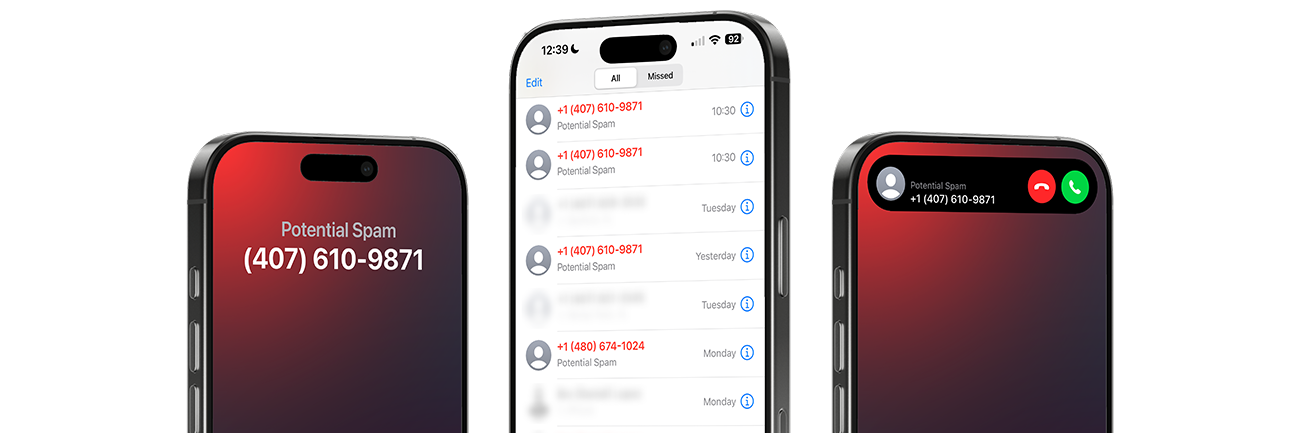
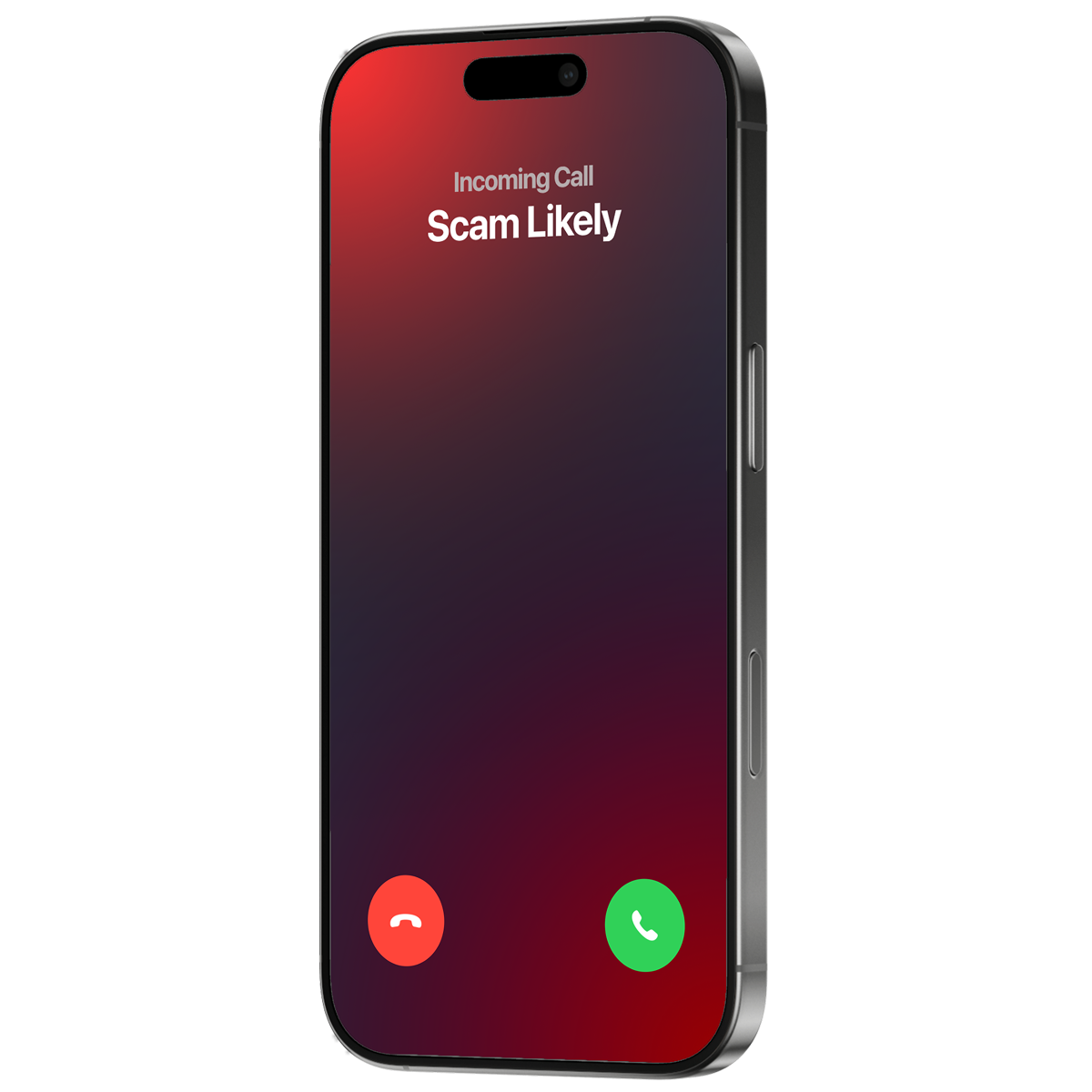
Combined, T-Mobile, AT&T, and Verizon identified or blocked over 50 billion calls in 2023–2025. These filters stopped a lot of bad actors, prevented countless unwanted robocalls, and foiled scammers and spammers alike. But... billions of legitimate, wanted calls get blocked too, costing businesses pipeline, revenue, and jobs.
Why does this happen (and what can you do about it)?
Reason 1
It’s a new or newly issued number
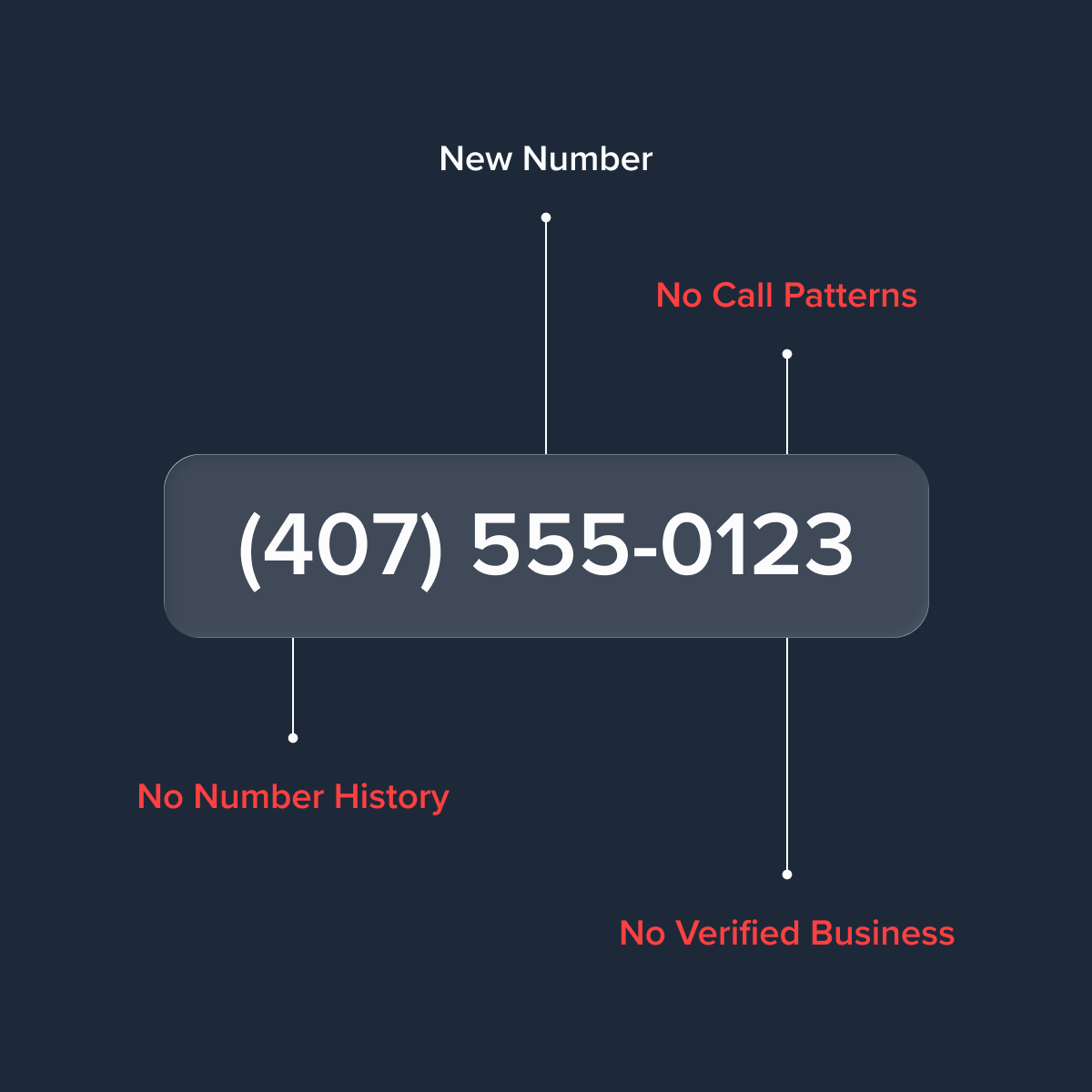
Think new numbers are clean and trusted? Think again. Because scammers constantly rotate and replace numbers to avoid flags, carriers and algorithms distrust new numbers and instead, value number history. Without established call patterns, trust signals and verified business association, new numbers are risky by default. Pair that with immediate high-volume dialing, and you’ve got a textbook spam profile, even if you're running clean, permission-based campaigns.
Takeaway
Make number reputation, not replacement, a cornerstone of your strategy. And when you do get new numbers, always warm them up. Start with low-volume, high-quality outreach and scale up. Register every new number to your business via freecallregistry.com to build legitimacy and set yourself up for success.
Reason 2
Unnatural or inconsistent high-volume dialing
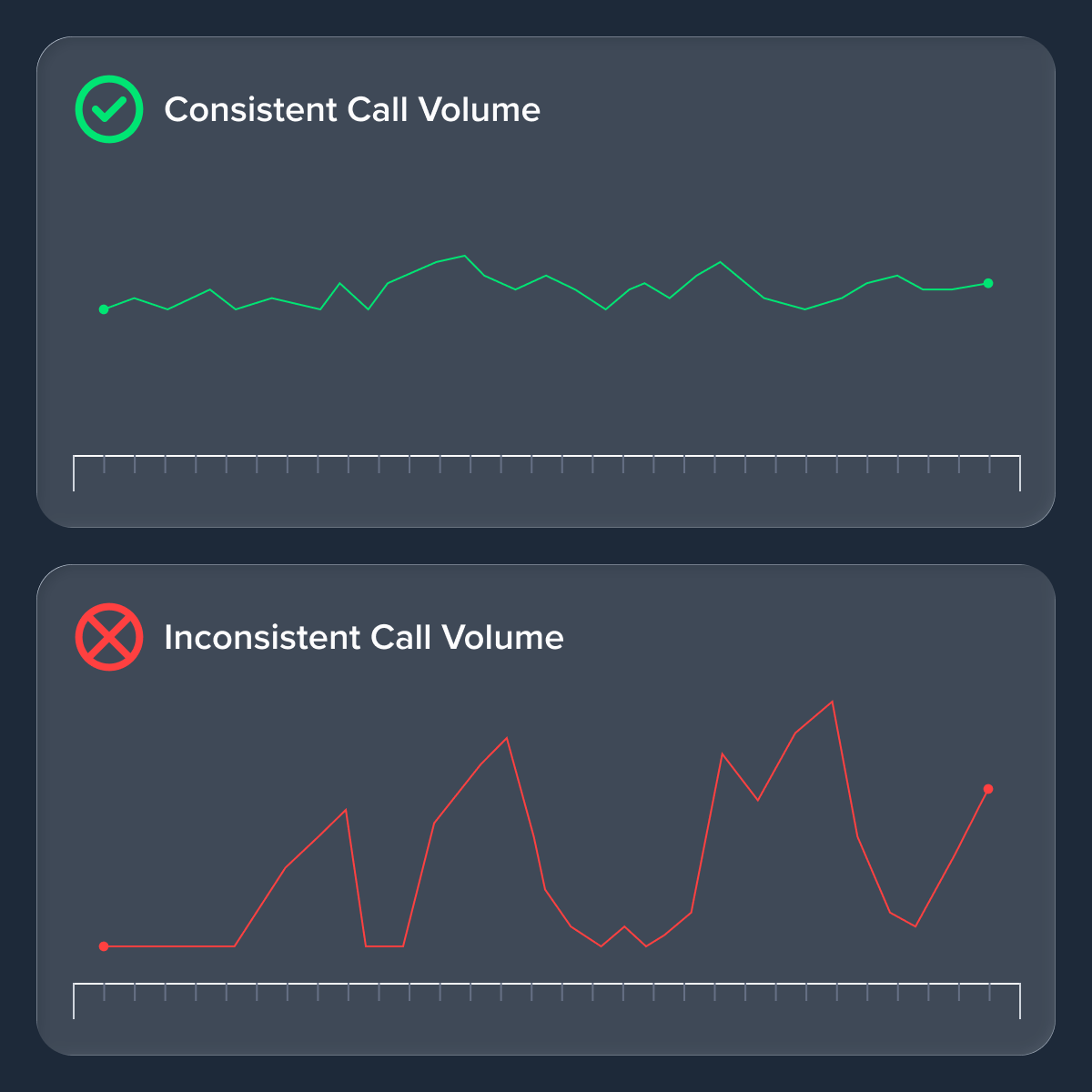
Volume alone isn’t a red flag - but your patterns might be. Enterprises like banks and airlines can make millions of monthly calls with little issue. Why? Because their numbers are verified, their traffic is expected, and their complaint rates are low. But if your team exhibits inconsistent call volume - like spikes and droughts - or unnatural patterns - like simultaneous calls on multiple lines - it may trigger the algorithm and invite flags.
Takeaway
Dialing at scale is absolutely possible, but it requires predictable patterns and positive engagement signals. Avoid sudden spikes and other potentially unnatural behaviors. Consider distributing calls across a pool of verified Caller IDs to support more consistent, natural call volumes.
Reason 3
Call duration is too low
Algorithms closely monitor how long your calls last. Why? Because short calls and quick hangups send a signal that your calls aren’t welcomed or engaging. It’s one of the strongest negative trust signals - and it can lead to spam labeling, even when you're calling legitimate, opted-in leads. Short calls can stem from weak intros, outdated data, or awkward delays (like those caused by parallel dialers), and are a surefire way to drag down your number reputation.
Takeaway
Pay close attention to your team’s average call duration and the percentage of “short-duration” calls (under 5 seconds). Identify contributing factors - like agent intros, lead quality, or connection delays - that may be limiting engagement. On the flips side, the more quality conversations your team logs, the stronger and more resilient your number reputation becomes.
Reason 4
Repeatedly calling the same contact
There’s a fine line between persistence and nuisance. Repeated calls to the same contact in a short time window can come off as aggressive. Whether you’re making literal back-to-back calls (aka “the double-tap”) to boost answer rates, or hitting the same lead too many times in too few days (like 10 calls in a week), you’re likely to upset the algorithms - not to mention your prospects.
Takeaway
Space out attempts and avoid gimmicky behaviors meant to trick people into answering. Track answer rates by call attempt to determine how many touchpoints make sense, and when it’s time to stop. Consider using email and SMS to add context and maintain engagement without overwhelming your prospects.
Reason 5
Number blocks and complaints
Yes, even legit calls can trigger complaints. Unprofessional agents, calling too early or late, calling too often, incorrect CNAM, and other issues all contribute to contact complaints. And it doesn’t take many. A few people blocking your number or reporting spam can quickly damage your caller ID reputation and lead to call labeling or blocking.
Takeaway
Focus on the customer experience. Audit your scripts, timing, and lead sources regularly to find friction points. The more relevant and respectful your outreach, the better your reputation. And the lower your risk of flags.
Dial confidently with ARMOR® Call Protection
You already have enough to manage
ARMOR® Call Protection was built by industry insiders with firsthand experience inside the carrier and call analytics ecosystem -people who understand exactly how calls are evaluated and flagged. Our award-winning solution is purpose-built to protect your numbers, boost answer rates, and unlock the full potential of your outbound campaigns.
Carrier registration
Nationwide real-time spam testing
Ongoing monitoring and alerts
Call pattern and performance analytics
AI-powered strategic recommendations
Expert guidance
Shift the burden to us and start dialing with confidence
Have a spam problem? Let's connect.
Protect your calls. Increase your answer rates. All without changing your tech stack.