
Accidentally calling a honeypot number can hurt your number reputation and lower your answer rates. Learn what honeypots are, why it’s possible to call them unintentionally, how they contribute to spam labeling, and how to use ARMOR® to restore number reputation so you can improve future outbound performance.
Honeypot numbers are hidden lines used by carriers and analytics providers to help detect unwanted calling behavior and gather intelligence about potential spam/scam callers. Because they’re indistinguishable from real contacts and often appear in aging or unverified data, they can make their way into outbound lists and contribute to spam flags that affect number reputation and answer rates. The ARMOR® platform can help teams detect spam labels early, remediate them with carriers, and strengthen their calling practices over time.
You already know how fragile number reputation can be, and how much it can impact your outbound strategy. Analytics systems evaluate a myriad of signals over time to assess number reputation, and accumulated negative indicators can result in spam labels that hurt your performance.
One concerning risk factor is calling phone numbers that were never meant to be answered in the first place. These numbers are called honeypots.
Honeypots exist to identify and gather intelligence on unwanted callers. They’re used by carriers, analytics providers, and regulators to identify illegal robocalling patterns, track spam campaigns, and build profiles of problematic callers and calling behavior.
But because honeypots are intentionally indistinguishable from real numbers, they can make their way into call lists and negatively impact your number reputation, even if your business case is legitimate. And when that happens, the consequences can feel wildly disproportionate.
Below, we’ll break down:
A honeypot number is a phone line that doesn’t belong to a consumer or a business. It’s unused, unassigned, or seeded intentionally in data sources so that any call to it is assumed to be unsolicited.
Honeypots are primarily used to help identify illegal robocalling or suspicious calling patterns. Since no legitimate customer should be at the other end of the line, a call to a honeypot often indicates:
But that’s not always the case. Many organizations place high volumes of calls that are actually wanted by their contacts, and honeypots can end up on the list for a variety of reasons.
And that hurts caller reputation no matter who is making the call.
Moreover, honeypots don’t carry any sort of warning label. They look exactly like normal numbers and can blend into the same places your real contacts come from. That’s why the next step is understanding how they end up on your lists in the first place.
Outbound teams can land on honeypots for a variety of reasons:
So calling a honeypot isn’t necessarily a sign that you’re behaving like a scam caller. But it can indicate issues with list quality.
While analytics systems understand the value of honeypots for catching illegal traffic, they are built for unwanted calls too. If your number calls a honeypot, it becomes part of the behavioral picture, even when there’s no bad intent behind it. While a single infraction is unlikely to cause an issue on its own, repeat offenses or a honeypot hit alongside other risk signals can stack into a spam label.
The good news? While avoiding honeypots entirely may not be possible, you can meaningfully reduce your exposure. We’ll cover those strategies next.
Honeypots tend to appear when data quality slips. This can happen through aging records, weak sourcing, lax opt-ins, or other validation gaps.
Even teams that prioritize list quality can accumulate bad entries over time, but strong list hygiene goes a long way toward keeping honeypots off your lists or at least reducing them to a minimum.
Here are some practices that make an impact:
Honeypots rarely show up when leads come through clear, traceable opt-in paths. Prioritizing permission-based capture (such as forms, inbound interest, event registrations, or trusted providers) significantly reduces the chance of dialing bad or unverified numbers.
Contacts move, numbers get reassigned, and once-valid entries age out. Routine reverification helps ensure you’re calling active, assignable numbers. Tools like the Reassigned Numbers Database (RND) can also help validate whether ownership has changed since the original opt-in.
Dormant CRM lists often contain outdated or unverified entries. Before pulling them into a new campaign, run a validation check to ensure the data hasn’t drifted into risky territory.
Tools like PhoneBurner’s Connect Scores can help here, by surfacing low/no-engagement numbers so they can be de-prioritized before being fed into your outbound campaigns. This often includes honeypot numbers.
Even if the identity of a specific honeypot isn’t clear at first glance, the surrounding patterns usually are: declining answer rates, rising call failures, or unexpected reputation changes. The ARMOR® service call analytics can help surface correlated trends and data quality issues early so you can isolate and correct the source.
Strong sourcing, steady verification, and disciplined data hygiene will dramatically reduce your exposure to honeypots (not to mention improve every part of your outbound performance).
But eliminating them entirely is a tall task.
Here’s what happens when you call a honeypot.

A honeypot hit doesn’t necessarily create an immediate penalty on its own. But it is a negative signal in your overall risk profile: one more data point that analytics systems weigh alongside other patterns to determine the trustworthiness of your numbers. Here’s how the process plays out:
Every call your team makes contributes to a broader behavioral picture. Analytics engines weigh a mix of positive and negative signals to assess how likely your traffic is to be wanted. A honeypot hit is unmistakably a negative signal. It suggests that the calls may be less trustworthy or less likely to be welcomed by recipients.
2. Stacked signals can contribute to spam labels
Calling a honeypot by itself rarely triggers a spam label. But repeated hits can accelerate the path to a spam designation. So can a single hit combined with other concerning patterns such as low answer rates, short call durations, blocking activity, or inconsistent call behavior.
Increasingly, carriers and analytics providers evaluate activity at both the number level and the organization level, which means risk signals across multiple numbers can compound and impact the business more broadly.
Once a number has been flagged, contacts are far less likely to answer calls from it, even if those calls are wanted. Most mobile users don’t pick up calls labeled “Spam Likely,” and some devices suppress them automatically.
This is the part most teams feel first. Answer rates dip, live conversations drop, and suddenly everyone is scrambling for an explanation.
A honeypot call may be part of that story.
Simply stated, the ARMOR® team can help identify calls you’re making to honeypot numbers. But the value doesn’t end there. We provide ongoing monitoring of your numbers to help detect flags quickly, remediate false flags on your behalf, and help you adjust future calling practices to reduce the risk of honeypot hits (and all kinds of other threats) in the future.
Here’s what this looks like in practice:
Full ARMOR® service includes monitoring for your outbound numbers and alerts when they’re impacted by spam labels.
Since many teams don’t find out their number was flagged until after their answer rates tank, this early warning system lets you take action before the damage compounds.
When your numbers are mislabeled as spam, the ARMOR® team can remediate directly with carriers on your behalf. We do this without you having to ask.
This includes:
Your team stays focused on what matters, not on tracking down carriers or troubleshooting blind. And once flags are resolved, ARMOR® continues monitoring your numbers and alerts you if anything changes.
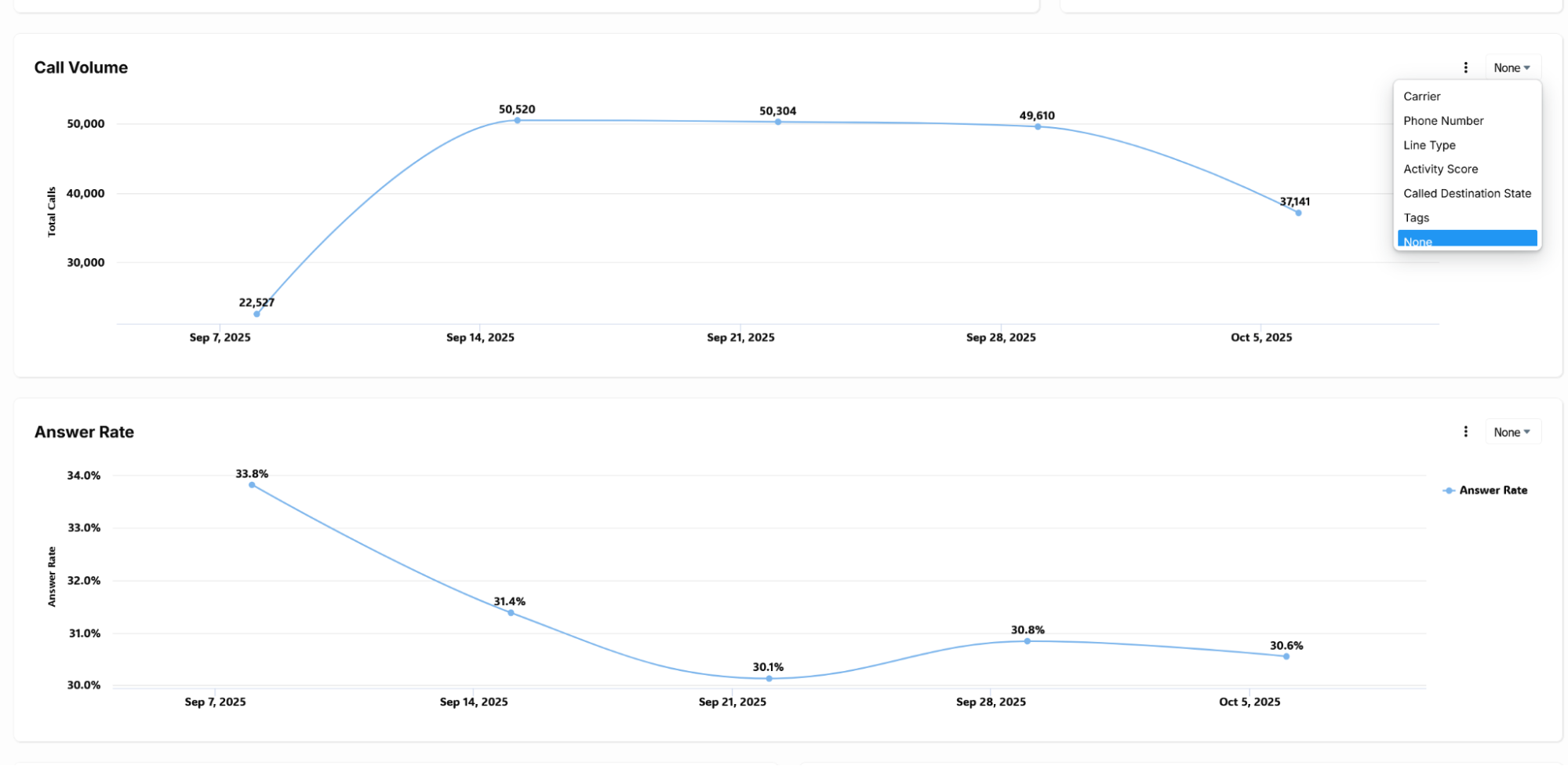
The ARMOR® dashboard also provides data that helps you recognize trends in your dialing behavior so you can adjust calling practices to improve the reputation of your numbers over time.
Teams using the ARMOR® platform can pull insights from their call analytics data to identify outbound patterns like:
Armed with this data you can fix what’s broken, follow what’s working, and optimize your answer rates over time.
Cutting-edge features like MARCUS™, our intelligent AI analyst (coming soon) can also help provide strategic recommendations based on your data. And a dedicated customer success manager is available when you need human expertise.
Calling honeypots is a genuine threat to call deliverability, even for businesses engaging in legitimate call campaigns. It’s important to understand why honeypots exist, why you may unintentionally dial them, what you can do to avoid it, and how quickly you respond. You need a way to detect the impact, remediate any flags, and adjust your outbound strategy to protect your reputation over time.
ARMOR® gives you the visibility you need to react quickly, the support you need to address flags as they arise, and the data you need to optimize your outbound call practices going forward.
If you want to safeguard your number reputation and protect your contact rates, get an ARMOR® demo and see exactly how the platform can support your organization.