CNAM issues can make outbound calls display the wrong business name (or no name at all), reducing trust and lowering answer rates. CNAM problems are different from spam flags, but both affect how your caller ID appears to contacts. Testing tools like those available from ARMOR® can help organizations verify how their calls are displaying on devices across different carriers to identify potential CNAM errors and detect spam flags, then take steps to improve trust and safeguard their number reputation.
If your outbound calls sometimes display the wrong business name (or no name at all), you’re likely dealing with a CNAM issue. CNAM problems are a separate issue from spam flags, but both can impact the way your organization’s calls display to contacts when you dial.
That means CNAM also plays a role in how contacts perceive your calls and whether they choose to pick up. Inconsistent caller names erode trust, drag down answer rates, and create confusion across teams that depend on reliable outbound dialing.
This article breaks down what CNAM is, how it affects your caller ID, how it differs from spam labeling, and what steps you can take to cleanly diagnose and resolve CNAM problems.
CNAM, or “Caller Name,” is the 15-character name that telecom providers use to identify callers to their mobile subscribers. Unlike Branded Caller ID, a service that businesses pay for, CNAM displays to a sizeable subset of mobile subscribers who have premium caller ID. It’s pulled from the Line Information Database (LIDB), a shared set of databases that U.S. carriers use to store caller-name records.
CNAM helps contacts:
Businesses benefit from CNAM when it works properly. Displaying your organization’s name when you dial contacts helps build trust by identifying who you are versus displaying just a number. This can encourage them to answer your calls, improving performance for teams that rely on outbound conversations in industries like sales, service, support, healthcare, field teams, and more.
But CNAM isn’t perfect. It’s not a single archive curated by a specific authority; it’s updated by different carriers and stored across multiple databases. That means it’s often inconsistent, especially now that numbers are rotated and change hands so frequently.
This can lead to several common caller ID problems that can negatively impact an organization’s outreach.
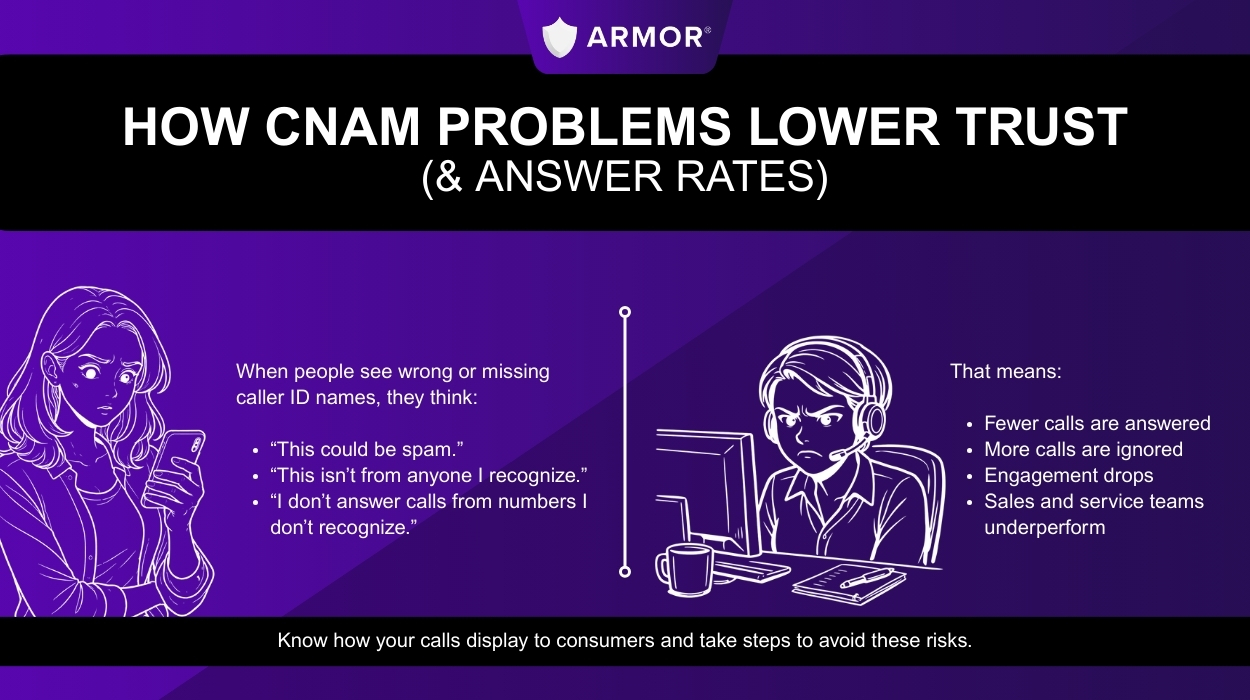
When people see an incorrect or unfamiliar caller name, they tend to think:
Even legitimate teams get caught in this perception gap.
Over time:
Fixing CNAM doesn’t guarantee that every call will be answered, but it does remove a common source of distrust, especially for audiences who rely on caller name to screen their calls. And since 8 in 10 Americans rarely answer calls from unrecognized numbers, this can have a massive impact.
Your number displays an outdated business name, a previous owner’s name, or something that doesn’t match your organization. This makes your contacts far less likely to trust your calls and answer them.
Instead of your business name, recipients may only see a city/state. They may even see nothing. This can result in non-answers from people who want your calls but simply don’t realize you’re calling.
You may appear correct on AT&T, outdated on Verizon, and blank on T-Mobile. This is extremely common because different carriers may have different sources for CNAM data or they may not update their data with the same frequency.
CNAM is not universal. While many consumers in the U.S. see some form of caller ID on their devices, others see only a city/state lookup.
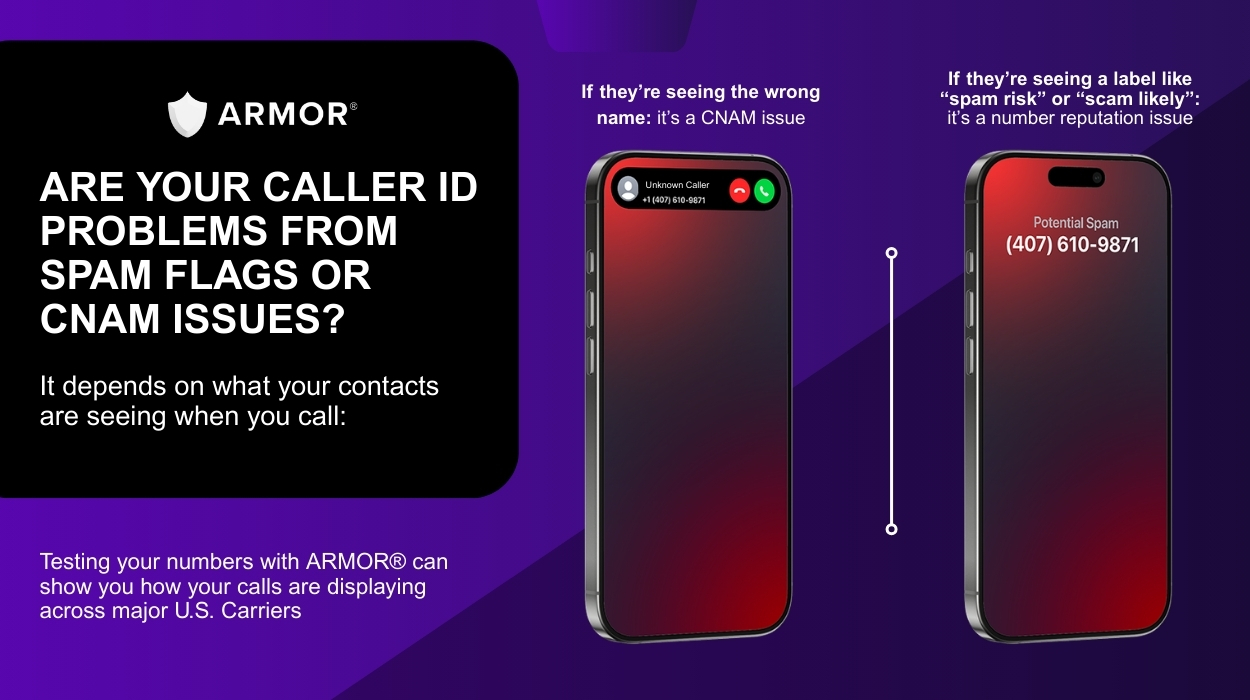
CNAM issues and spam flags can both impact how likely contacts are to answer your calls. But these are separate issues that each affect how your calls appear to contacts, and CNAM issues do not cause spam flags, at least not directly.
While CNAM problems do not directly trigger spam labels, they are a secondary factor for Verizon and they can affect your odds of being flagged indirectly by making contacts less likely to answer and/or more likely to block your calls. Both are key metrics many carrier algorithms and analytics engines use to determine spam or scam risk.
Artificially low answer rates that result from CNAM issues can make your calling behavior resemble that of fraudulent or nuisance callers, even if your calls are legitimate and wanted by the contacts you’re dialing. Learn more about the factors that can impact your spam flag risk.
Before you fix CNAM issues, you need to know how your number actually appears across networks. Teams using the ARMOR® platform can run a free number test to see:
Having this information allows you to take meaningful next steps to resolve errors or inconsistencies. Teams using the full ARMOR® service have several options available:
In either case, you’ll have an opportunity to resolve the issues that are impacting your number reputation and the level of trust contacts associated with your calls. The ARMOR® platform also includes ongoing monitoring for your numbers and detailed analytics data on metrics like answer rates and call duration, which can be used to improve your outbound strategy over time.
*In some cases, multiple tests may be required to get the CNAM result.
Related: Calling a Friend vs. Using a Spam Checker to Test Your Phone Number: What’s Better & Why?
While CNAM verification is just one part of maintaining a clean and consistent caller ID, it can still help your organization:
Fixing CNAM issues won’t clear spam flags or solve every deliverability issue, but it will improve the experience for millions of wireless subscribers who rely on caller-name information to decide whether to answer. That makes it worth getting right.
If you want help verifying your display across carriers, our team is here to help.