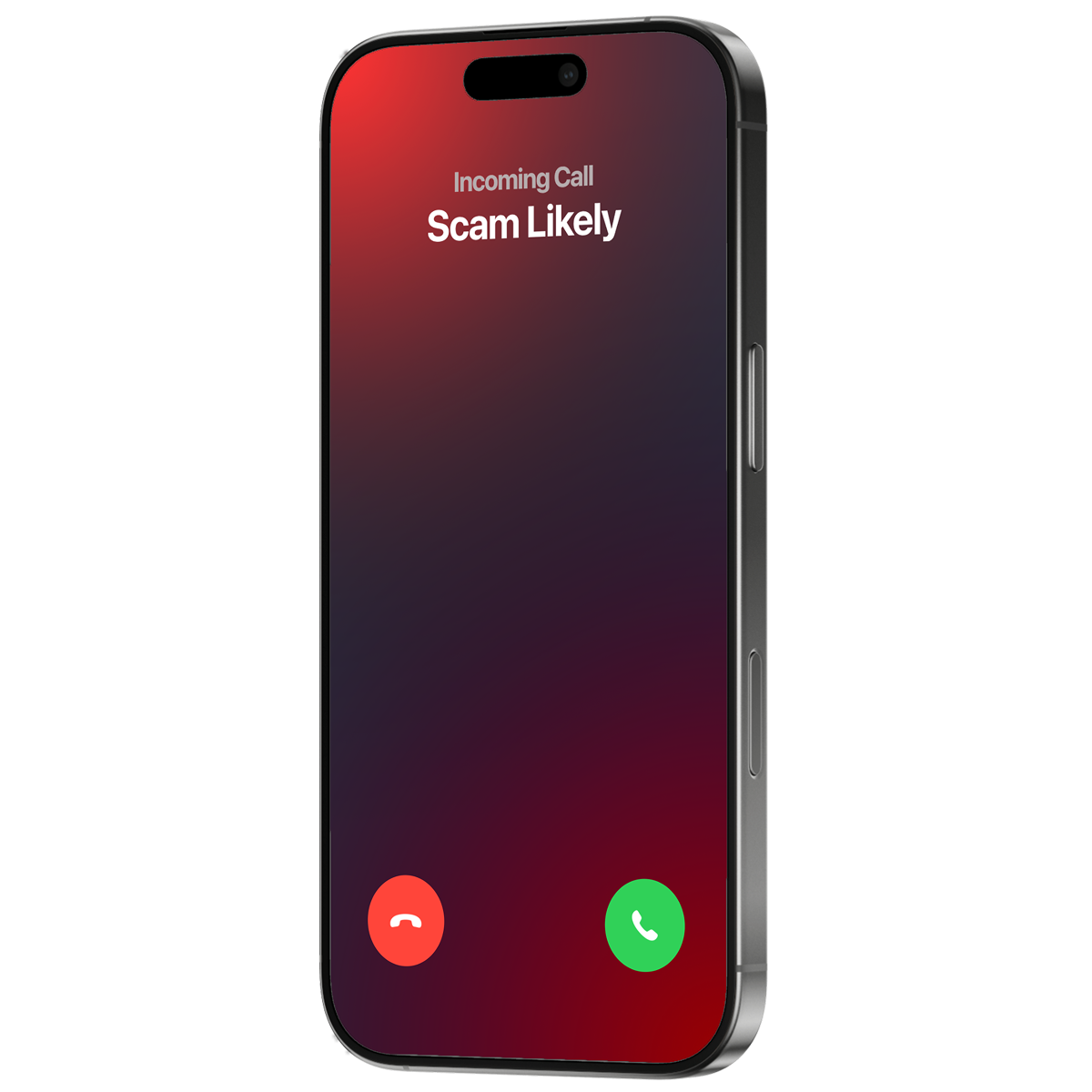
Whitelisting a business phone number is not possible - no carrier or analytics engine maintains a protected list that exempts numbers from spam labeling. What some vendors call whitelisting is really carrier registration, which is a positive trust signal but does not prevent flags from being applied.
Carriers evaluate individual calls in real time using signals like STIR/SHAKEN attestation, call frequency, and consumer feedback, and numbers are regularly reassigned to new owners, making the concept of a permanent whitelist untenable. The workable answer is ongoing number reputation management: registering numbers, monitoring for flags, and remediating directly with carriers when legitimate calls get mislabeled.
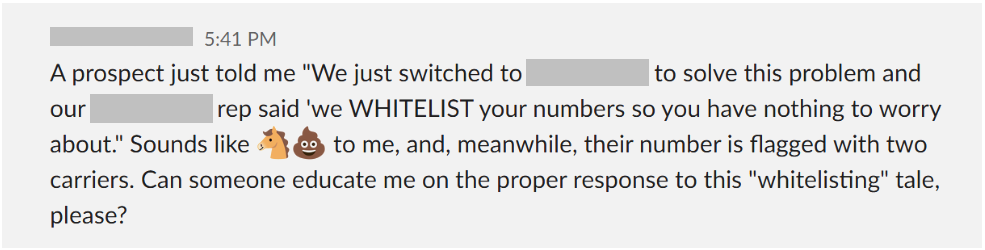
An interesting question recently popped up in our company Slack channel.
A colleague had just gotten off a call with a prospect who'd switched dialers because their new vendor promised to "whitelist" their business numbers, so they wouldn't have to worry about spam flags. The problem was, they were on the phone with my colleague, because, well, their numbers were currently flagged as spam on not one, but two carriers.
What's "the proper response to this 'whitelisting' tale," he asked?
That prospect isn't alone.
The idea that phone numbers can be whitelisted to prevent spam flags has been floating around for a while. It comes up in vendor pitches. It comes up in sales team conversations. It comes up in Google searches — a lot of them.
So whether a vendor promised you this benefit, or you're looking into how to whitelist your company phone number on your own, you're in the right place.
I’m going to set the record straight.
The concept of a whitelist exists in plenty of other places, and works well in those contexts.
The pattern is consistent: a trusted entity gets added to a list, and once it's on that list, it bypasses the scrutiny that everything else is subject to. So when a vendor says they can whitelist your company phone numbers, it tracks. You picture a list of legitimate company numbers somewhere that your business numbers get added to. Once they're on it, they're protected.
It's a clean mental model. But for sensible reasons you’re about to discover, it doesn’t apply here.
There is one thing in the phone ecosystem that gets close to what people imagine when they hear "whitelist" — carrier registration. It's worth understanding, because it's likely what vendors are referring to.
There's real value in it. But it’s misrepresented.
Here's the reality. Businesses can submit basic information about their organization and how they use their numbers for outbound calling to the analytics engines that power AT&T, T-Mobile, and Verizon's flagging algorithms. They can do this individually, or cover all three carriers at once via the Free Caller Registry.
It's something legitimate businesses do that bad actors cannot, which is why it carries some weight with the analytics engines. And it’s why vendors offer to do it as a benefit of choosing them.
But there's a big gap between helpful and whitelisting. Registration doesn't add your numbers to a protected list. It doesn't prevent flags from being applied. It's a positive trust signal, and calling it more is overselling.
Why doesn't it go further? Why isn't there a list that fully protects your numbers once you've proven you're a legitimate business?
That's what the rest of this article is about.
Back to that Slack thread. How do you explain to someone why you can't whitelist a number? A couple of industry experts with years of experience at AT&T, T-Mobile, and Hiya came back with two reasons that explain why the idea can't hold up.
When carrier analytics engines decide to flag a call, they aren't looking at your phone number as a fixed entity with a reputation attached to it. They're looking at the calls themselves, processing dozens of data points to determine whether outgoing calls look risky. They look at signals like STIR/SHAKEN attestation, originating carrier, call frequency, hangups, and number blocks, among many others.
This is by design. 212-555-1212 may belong to a legitimate business making wanted calls today. But what if another entity spoofs that number tomorrow? What if a local sales rep starts using it in shady ways? Carriers need a system that's dynamic — one that uses real-time data to evaluate each call on its own terms.
That's why a number can go from clean at 3pm to flagged at 6pm (or even from one call to the next). It's why calls from the same number can be flagged in one location but not another. It's why a flagged number can recover.
In other words, there's no static trusted or untrusted state that a number can be locked into. In a system so dynamic, there’s no place for a permanently safe whitelist.
There's another reason no permanent whitelist could work: phone numbers don't stay with their owners forever.
Numbers get released and reassigned constantly. According to the FCC, approximately 100,000 numbers are reassigned every day in the US. A number that belongs to a legitimate business today might be disconnected next month, and reassigned to a bad actor shortly thereafter.
Bottom line? Carriers can’t afford to give any number a free pass. Calls get evaluated on their own merits. No whitelist.
The real answer is number reputation management. It's an ongoing practice, not a "one and done" fix.
That means registering (not whitelisting) your numbers, paying attention to the signals your calls are sending, proactively monitoring for flags across major carriers, and remediating directly with the carriers when legitimate calls get flagged.
It helps to have a partner in your corner who knows the space. That’s where ARMOR® Call Protection comes in. Our team understands how carrier analytics and labeling systems evaluate calls, because we’ve worked inside the ecosystem that shapes those decisions. We help businesses monitor their numbers, remediate false flags, and stay ahead of the issues that affect their answer rates.
No whitelist required.
What does it mean to whitelist a phone number?
While there is really no such thing as whitelisting a phone number, many companies use the term to describe the process of registering a legitimate business and its phone numbers with the carriers and analytics partners that label calls.
The belief is that adding the number to this database will prevent spam labels from being applied to its calls. Unfortunately, the idea of a permanent whitelist is a myth. Carriers evaluate every call in real time based on a wide range of call patterns and signals. They don't maintain a protected list of trusted numbers.
How do you whitelist a company phone number to prevent spam flags?
You can't. There's no mechanism — at any carrier or analytics partner — that allows a company phone number to be added to a list that permanently prevents it from being flagged as spam.
What this term often refers to is the process of registering your business numbers with the carriers, via the Free Caller Registry, for example. Registration sends a positive signal to analytics engines, but registered numbers can and do get flagged when other signals look risky.
The reason no whitelist exists is structural. Carrier analytics engines evaluate every call individually, in real time, based on behavior signals like call frequency, duration, hangups, and STIR/SHAKEN attestation. A number's flag status can change at any time based on how its calls are being made and received. There's no static state a number can be locked into, and no list that can override the system.
If you can't whitelist a business number, what can you do?
While no permanent whitelist exists, businesses can actively manage their number reputation to reduce spam flags and improve answer rates.
This includes proactive and ongoing monitoring, paying attention to the call behaviors that send positive or negative signals (call frequency, duration, hangups, complaint rates), and remediating directly with carriers when legitimate calls get flagged.
Businesses that consistently protect their answer rates treat this as an ongoing practice, often with help from a partner like ARMOR® Call Protection that understands the carrier and analytics ecosystem from the inside.