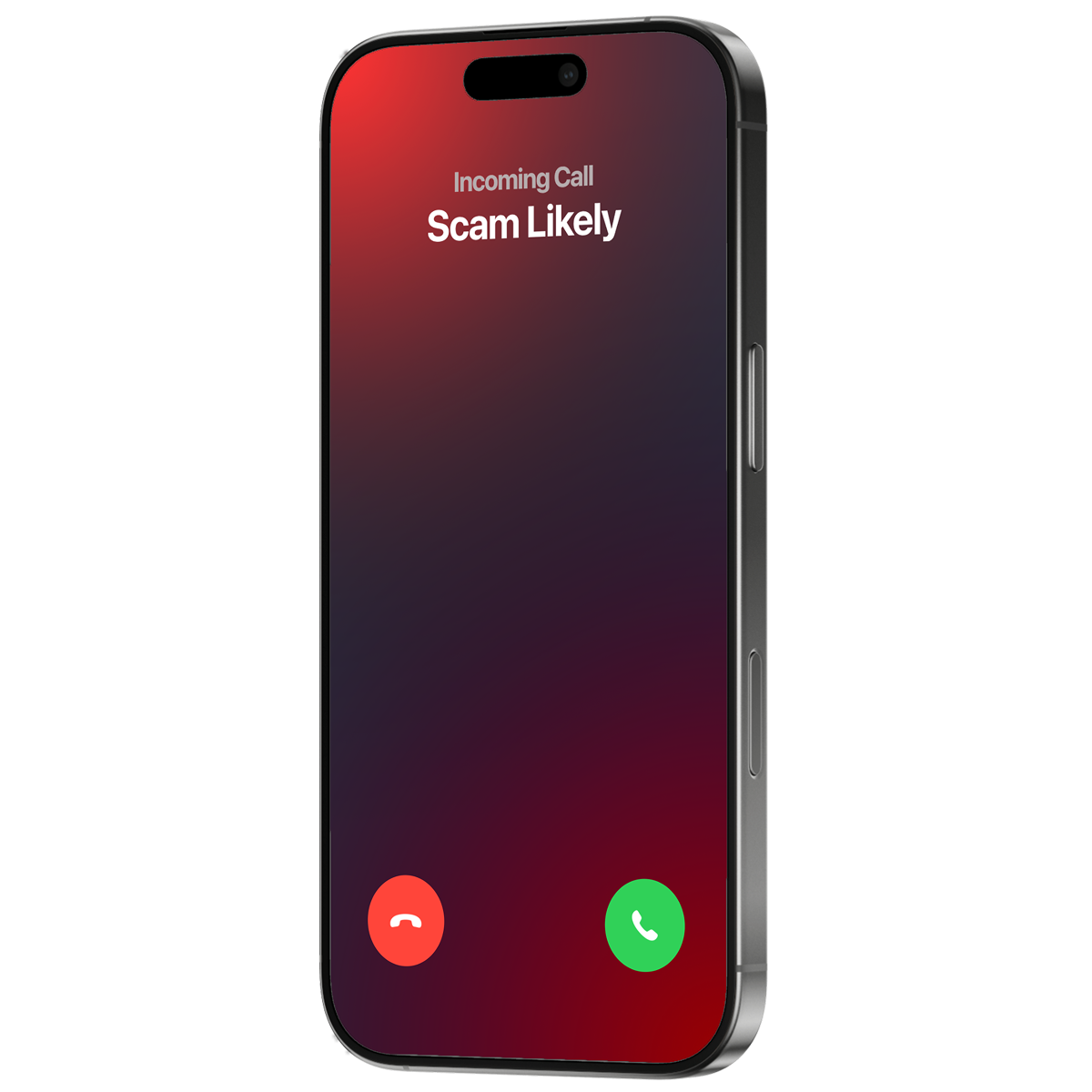
Carrier reputation is no longer the only thing outbound teams need to watch. Apple reportedly applies its own community-driven spam reporting signals, even through iMessages and FaceTime, and even when a number appears clean at the carrier level. This issue is related to the broader landscape of modern outbound. Apple, carriers, device makers, and third-party analytics platforms may all now be shaping whether your calls and messages get through.
The following account is based on a real interaction experienced by a member of our team. Details of Apple's response reflect what was communicated during that support call and may not represent Apple's official policy.
__________
Imagine being blocked from FaceTiming your own spouse. If you or anyone on your team makes outbound business calls, this is a must-read. (Pay especially close attention if you ever use a personal line for business.)
Something surprising happened during a recent conversation with a sales prospect that I haven't been able to stop thinking about.
Our team member was in a routine back-and-forth with an ARMOR® lead: an iPhone user on T-Mobile. She asked him to call her cell. It went through fine. T-Mobile showed his number as clean. No flags. No issue.
Except later, he sent her a text… and it landed in her spam folder.
Confused, he called Apple. They told him his number was blocked; not by T-Mobile or another carrier, but by Apple itself. As a one-time courtesy, Apple unblocked the number, but were clear that if it happens again his texts and FaceTimes would be blocked with limited recourse. Even to his own wife. The only reported fix would be getting a new number entirely.
This is more common than most people realize. And it points to a trend that outbound professionals need to take very seriously. Your calls, texts, and other communications are being watched and judged by an increasing number of players, not just carriers.
Your ability to reach people depends on understanding who's keeping score and protecting your outbound numbers.
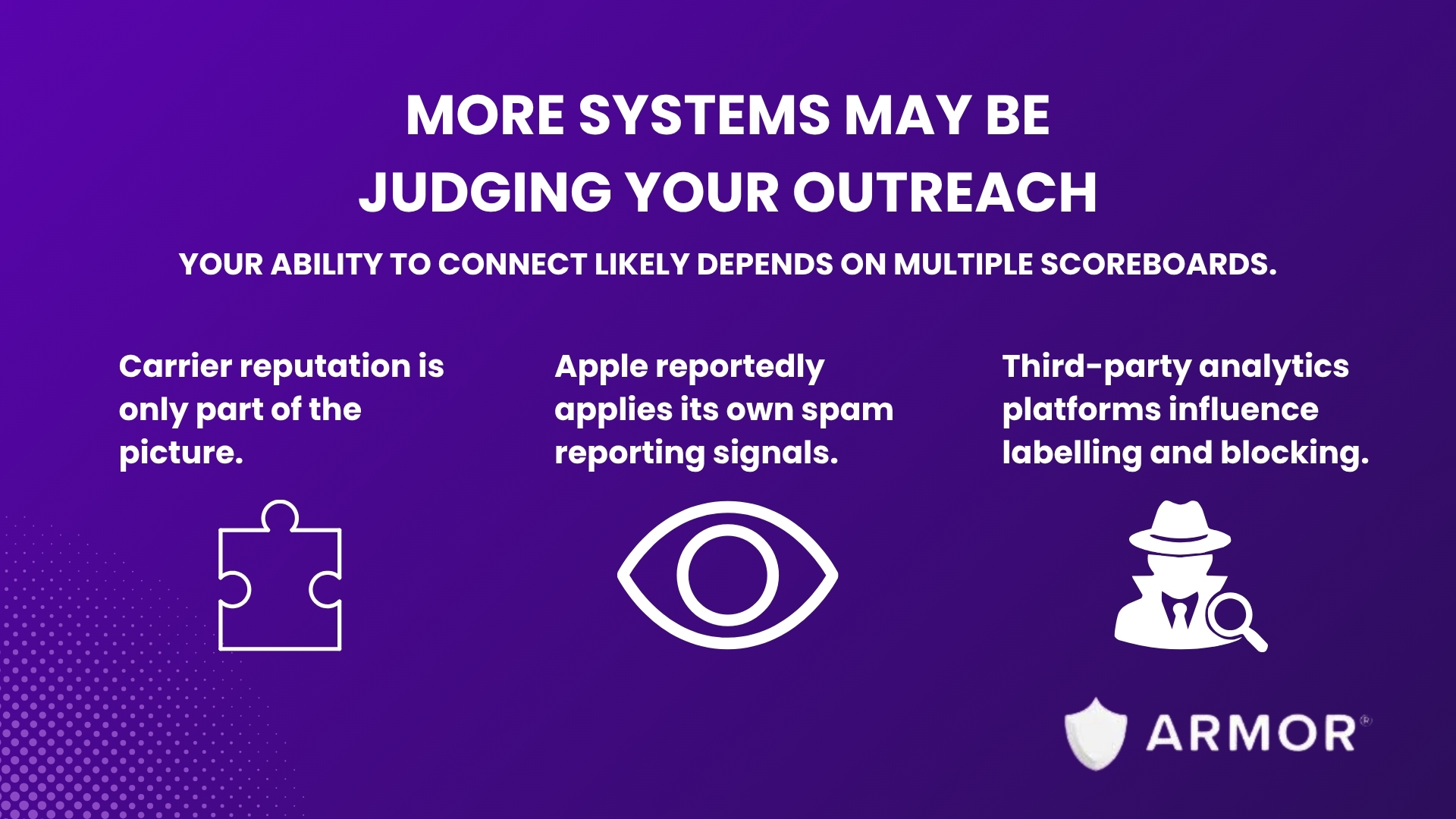
Apple has not publicly documented how its spam filtering and number-blocking systems work. What follows is based on our team's firsthand experience, our user’s conversations with Apple Support, and patterns reported across Apple's community forums.
When an iPhone user receives a message or FaceTime call from a number they don’t know, Apple gives them a way to report it as spam. That report may not block the sender outright, but it does act like a downvote.
It's not widely known how many downvotes it takes (some user reports have indicated it can be as few as one) but when enough negative feedback accumulates, users have reported that Apple’s system acts automatically. The sender's messages get routed to spam folders. Their FaceTime calls get silenced. And critically, none of this is visible to the sender while it’s happening. No warning. No notification.
If you're lucky, someone on the receiving end tells you (the way our lead found out). But at that point, the damage is done. The only path forward is to call Apple Support. Community forums are full of people who've been through this and the experience shared are largely consistent: one unblock, ever. If it happens again, the block is reportedly permanent. The most common solution reported is a new number.
Related: 27 Factors That Can Drive Up Your Spam Flag Risk & How the ARMOR® Platform Helps Protect You
This isn't just an Apple issue, and it isn't just a personal phone issue. It reflects a broader shift in how outbound communication is being evaluated. Customer feedback is now a meaningful input across platforms, shaping what gets through (and what gets buried) for business and personal lines alike, across calls and texts.
Third-party apps like Hiya, YouMail, and First Orion operate their own independent reputation databases. These apps are installed on millions of phones and are deeply integrated with major carriers. When users flag a number as spam, that feedback can influence how calls are labeled, filtered, or blocked across a meaningful share of the phones your team calls every day.
Google reportedly has its own version of this for Android users. Samsung appears to have built similar filtering into its native dialer. The common thread across all of them is the same mechanic Apple uses: community-driven reports driving significant influence over filtering decisions.
The playing field keeps expanding, and most businesses don't know how many scoreboards they're on.
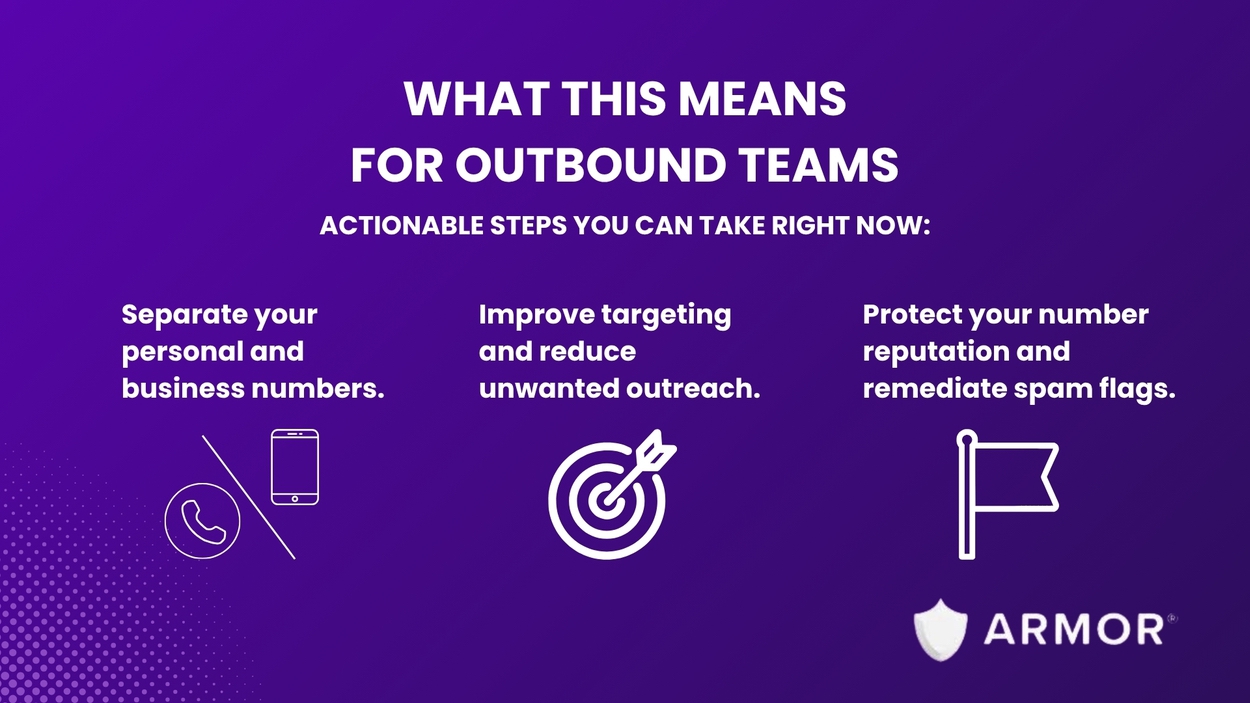
So what do you do with all of this? Three things.
The outbound professionals who will thrive in this environment are disciplined about which numbers they use for business. They call with intention and integrity. And they have visibility into how their outreach is being received across the systems keeping score.
Your business line is an asset. Your personal number is your identity. When you use one for the other, even occasionally, you put something irreplaceable at risk.
A dedicated outbound number can be rested, remediated, and in extreme cases, retired. A personal number (the one tied to your bank, your family, your contacts, your decade of history) cannot.
Exercise extreme caution when mixing business outreach with a personal line. Better yet, leverage dedicated business lines, which are widely available today, and keep the two cleanly separated.
Even mixing business lines for different call purposes can create problems. Spam analytics care about behavioral consistency. When one number handles both sales and support calls, for example, it can create inconsistent calling patterns that spam analytics struggle to trust.
Bottom line? Keep it separated.
Every call you make is a data point. Who you call, how often you call, whether they engage, whether they ignore you, whether they report you — these signals are being collected and evaluated across multiple systems simultaneously. The good news is that the same habits that make you a better caller also make you a safer one.
“The playing field keeps expanding, and most businesses don't know how many scoreboards they're on.” - Chris Sorensen, CEO | ARMOR®
Start with your list. The quality of who you're calling matters more than it ever has. Reaching out to people who are genuinely likely to want to hear from you isn't just good sales practice — it's protection. A spray-and-pray approach to untargeted or outdated lists is a downvote waiting to happen.
From there, think about how you're calling. Overly persistent outreach (too many attempts, too close together) is one of the fastest ways to accumulate flags. If your strategy relies on volume and repetition to compensate for poor targeting, you're playing a dangerous game.
Carriers, Apple, and third-party filtering systems are all, at their core, trying to identify the same thing: unwelcome, intrusive outreach. The goal isn't to outsmart them. It's to make calls worth receiving.
Related: Best Practices to Prevent Your Calls From Being Flagged
Even disciplined outbound operations can run into problems. What separates teams that continually struggle from those that thrive is visibility.
The best outbound operations don't wait for something to go wrong. They take proactive steps to protect their number reputation and treat their call campaigns as something to be continuously optimized, not just executed. They know when they're mislabeled as spam, remediate quickly, and monitor their call patterns to identify risks and opportunities, so they can adapt accordingly.
Business numbers are assets. The more deliberately you manage them, the more valuable they become.
Related: Call Reputation Management Services: Are They Worth It?
The team behind ARMOR® didn't stumble into this space. We helped build it. Our founders and leaders have held senior roles at AT&T, Hiya, First Orion, and others — the carriers and analytics engines shaping the systems this article is about. That gives us a perspective on call reputation that few others can match. When the ecosystem shifts, we're ahead of it.
If your business depends on getting calls through and getting them answered, you need more than a vendor. You need a partner who understands how the landscape is changing, tracks the edge cases, and helps you stay ahead of reputation risks before they show up in your results.
That's what ARMOR® does. From proactive number protection to ongoing monitoring, remediation, and analytics, we help safeguard the numbers your business depends on.
Disclaimer: The descriptions of third-party platforms and their filtering systems in this article are based on publicly available information, community reports, and our team's firsthand experience. They do not represent official statements or policies of Apple, Google, Samsung, or any other company mentioned. These systems may change at any time without notice.