New outbound numbers have no calling history. From a carrier's perspective, that makes them an unknown quantity. The wrong dialing patterns early on can result in spam flags before a number ever gets a chance to build a legitimate track record. Registering business numbers with carriers before dialing, carefully vetting contact quality, and monitoring number reputation help new numbers build trust signals. The ARMOR® service handles registration and remediation on your behalf and provides ongoing monitoring to catch flags early.
New outbound numbers start with no history, which might seem like a clean slate. But from a carrier's perspective, a number with no track record is an unknown quantity. It hasn't built trust yet, nor has it established a pattern of legitimate use. That makes the first few weeks of a new number's life critical for establishing healthy reputation signals.
Negative reputation signals can result in carriers attaching spam flags to your numbers. And without visibility into how your numbers are performing, there is no reliable way to identify spam flags so that you can take action to have them removed.
Below, you’ll learn how to set up your new business numbers to build healthy reputation signals from day one, one of the most important steps toward reducing spam flag risk and protecting answer rates.
When a number has no calling history, carriers and analytics engines have no trust signals to evaluate. There's:
As a result, new numbers that suddenly begin placing high volumes of outbound calls often draw scrutiny from carriers. Combined with no established history, that pattern can trigger flags quickly, even for legitimate businesses.
A common reaction to a flagged number is to replace it with a fresh one and start over. This tactic, known as number rotation, is a shortsighted strategy that carriers caught on to long ago, and rarely achieves the desired results.
That’s because high-volume scam operations routinely buy new numbers, use them, and quickly abandon them. Carriers and analytics providers have learned to actively monitor for this pattern.
Teams that constantly replace flagged numbers with new ones in an attempt to “start fresh” get stuck in the same cycle. Every one of their replacement numbers starts with no history and no trust, making it likely to be flagged when it starts being used for high-volume outbound.
Rather than solving the problem, rotation ensures that no number ever has a chance to build the sustained track record of healthy calling patterns that carriers look for. What’s more, carriers can now connect the dots between different numbers tied to the same operation.
Learn More: The Truth About Number Rotation: Why Your Calls Share a Fingerprint—and Get Flagged Together
Properly registering your numbers should be your first step toward establishing trust with carriers and analytics providers. This associates your outbound traffic with a known business entity, giving carriers a verified identity to evaluate alongside calling behavior. The ARMOR® team registers your numbers with the carriers on your behalf, adding an additional layer of legitimacy to the calls you place.
It's important to note that registration updates are not instantaneous. Propagation across carrier databases can take a few days, and during that window, your number is still building its reputation, so early spam flags are still possible. Fortunately, ARMOR® provides ongoing monitoring for your numbers, and when it makes sense, helps with remediation should false flags arise.
STIR/SHAKEN is an industry framework that helps carriers to verify the identity of the caller behind an outbound number. There are three attestation levels:
When attestation is partial or absent, the risk that the number is being spoofed by a bad actor goes up, which can cause calls to be flagged, downgraded, or blocked. That’s why it’s important to verify the attestation status of your numbers, new and old, with whatever platform or provider that powers your calls.
CNAM (Calling Name) is the text that displays on a recipient's phone when your call comes in. For new numbers, records take time to propagate across carrier databases, so display can be inconsistent or missing in the early days.
Caller ID has also evolved beyond CNAM. Branded services adopted by major carriers can show a company name, logo, and reason for the call, but require separate registration.
Before you start dialing, verify that your Caller ID is displaying correctly. The ARMOR® Spam Flag Checker is a useful tool to check what subscribers see when you call, and ARMOR® can follow up with carriers if something is wrong.
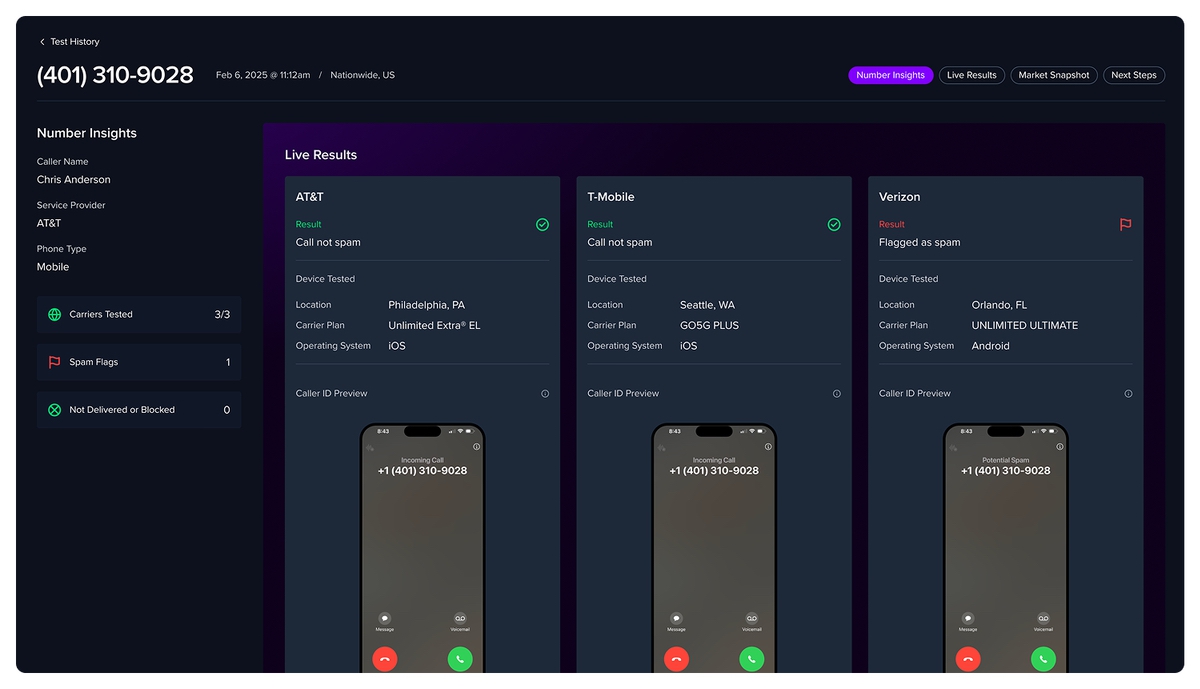
The first few days and weeks of a new number's use are critically important. For one, the prior owner's reputation may still have a lingering impact. For another, you are sending signals to the algorithms that will define the long-term viability and reputation of your numbers. Knowing how your call practices are being received is important.
Without monitoring, there's no reliable way to know whether a flag has hit, which carriers have assigned it, or when. By the time low answer rates make the problem visible, the flag has often been in place for days or longer, leaving your reputation in a critical state.
Monitoring gives you visibility into the status of your numbers so you can:
ARMOR® routinely monitors your numbers across major U.S. carriers and submits remediation requests directly to the assigning carrier when false flags appear. Having that in place from day one means you're not flying blind during the period when your numbers are most exposed.
For teams that can control their ramp-up pace, starting with lower daily call volumes and increasing gradually is a best practice.
High-volume outbound operations may need to place a significant number of calls from day one. But in either case, the most important factor is the quality of your outreach and how you use data to optimize it.
Related: Optimizing Call Deliverability When Dialing at Scale
Lean toward contacts who are more likely to answer and engage, such as:
This is a best practice for all numbers, but it’s especially important during the warmup phase. Calls that lead to live answers, real conversations, and lower complaint rates help establish stronger reputation signals early on.
Avoid using new numbers for cold, outdated, or unverified lists. A high percentage of unanswered calls, disconnected numbers, or immediate hang-ups send negative reputation signals.
If your team manages a pool of numbers, include new numbers alongside established ones so that call volume is distributed. This prevents the new numbers from carrying a disproportionate share of outbound activity before they've built any history.
Carefully watch your call volume, answer rates, call duration, and disposition data to ensure your calls are being supported by positive call engagement, not people who are unresponsive, or quick to hang up or block your calls.
These signals tell you whether your new numbers are landing or whether something needs to change. Your CRM or dialer may provide useful data to monitor.
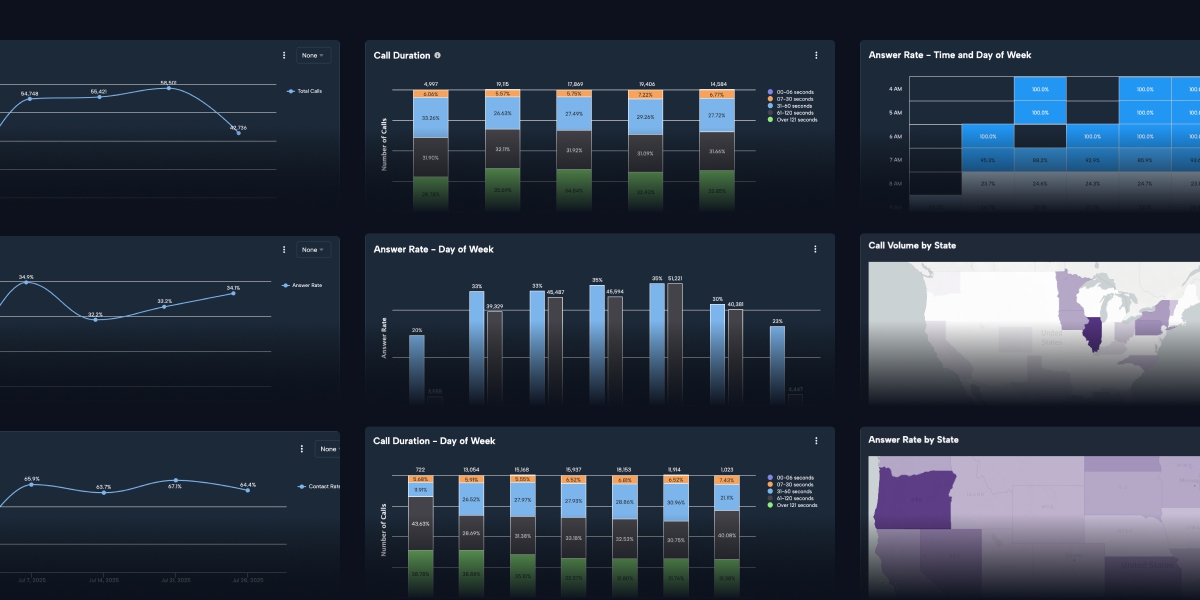
The ARMOR® dashboard, available to ProtectPlus and ProtectMax customers, gives you access to valuable call performance and call engagement data. Filter by phone number, carrier, time of day, and other criteria to monitor how new numbers are performing compared to established lines.
If a new number is producing unusually short call durations or low answer rates during warmup, that's worth investigating before you increase volume.
New numbers are a blank slate. Or worse, viewed by carriers as risky by default. The calls you make and the call engagement patterns that emerge in the first few weeks determine whether carriers learn to trust your numbers or view them as suspicious.
The process for building trust with new outbound numbers is fairly straightforward. Begin by registering before you dial, ramp slowly, and prioritize highly engaged, quality contacts. Then monitor your numbers for spam flags from day one, and build healthy habits that support their long-term reputation.
ARMOR® gives outbound teams the monitoring, data, and expert support you need to protect the new and established numbers that your organization depends on to grow your business.