High-volume outbound teams can't afford to ignore how carriers and analytics engines evaluate their calling behavior. Number registration, list quality and hygiene, complaint signals, call pattern consistency, and contact frequency all feed into the data models that decide whether your calls get flagged. ARMOR® monitors your numbers across all major U.S. carriers, remediates false flags directly on your behalf, and provides dashboard analytics that help enterprise teams identify and correct risky behaviors before they impact answer rates.
Outbound teams that dial at scale need to be prepared for carriers to scrutinize their calling behavior. Volume alone is not what gets enterprise teams flagged. There are organizations making millions of outbound calls per month with little to no issue, because their call engagement and behavior support it. Carriers and analytics engines evaluate a range of signals: how often numbers are called, how long conversations last, how contacts respond. When those signals are healthy, high volume shouldn’t be a liability.
The risk is what scale does when something goes wrong. Healthy patterns are less likely to cause problems that impact call deliverability, while unhealthy ones are more likely to be flagged.
Here’s a look at specific behaviors that carriers and analytics engines evaluate when deciding whether your calls deserve to be flagged, and how the ARMOR® platform provides the support and data you need to protect your outbound numbers.
A behavioral problem that might take weeks to surface at lower volumes can register in carrier systems within days. When a flag hits, the damage is proportional: more numbers affected, more contacts unreachable, more reputation and pipeline at risk.
And when a number does get flagged, you won't be alerted. Most businesses only find out something is wrong when their answer rates have already dropped.
At high volume, even a modest decline in answer rates can translate into hundreds or thousands of missed conversations every month. Small improvements in your team’s dialing behavior can have a huge impact on answer rates when applied across tens of thousands of calls.
Most of the strategies outbound teams can use to meaningfully improve deliverability when placing high volumes of calls fall into one of several broader categories: registration, contact targeting, avoiding complaints, call consistency, and avoiding overly persistent behavior.
Here’s a deeper look at each of these areas, with specific steps you can take to improve each one.
Before carriers evaluate how you're calling, they're evaluating who is calling. Registration, attestation, and caller ID display are all related to caller identity, and gaps in any one of them can increase the likelihood that your calls are flagged.
Registering your outbound numbers with telecom carriers is a baseline for any organization making calls at volume. This helps signify to carriers that a real business entity stands behind these numbers.
The age and call history of your numbers matter too. Carriers are understandably skeptical of brand new numbers, but see numbers with established positive call history as more trustworthy. Enterprise teams shouldn’t view numbers as disposable, but rather as long-term assets worthy of reputation and performance optimization.
STIR/SHAKEN is a call authentication framework that verifies a caller is authorized to use the number they're calling from (and that a number is not being spoofed by a bad actor).
Outbound calls are signed with an attestation level (A, B, or C) based on how completely that authorization can be verified. Full attestation (Grade A) tells carrier systems that the calling number has been validated end to end.
For enterprise teams, A-level attestation is the goal. Calls with lower attestation levels carry less verified identity, which can make them more susceptible to scrutiny from carrier analytics systems.
What your business expects to appear on a recipient's phone and what actually shows up are not always the same. CNAM (Caller Name) records can fall out of sync when numbers are ported or reassigned, and those mismatches erode trust with both recipients and carrier algorithms.
CNAM is managed at the carrier level. If your numbers aren't displaying correctly, contact your carrier directly to update them. If your business hasn't explored Branded Caller ID services, they offer even greater control over your call display for teams with the budget to cover it.
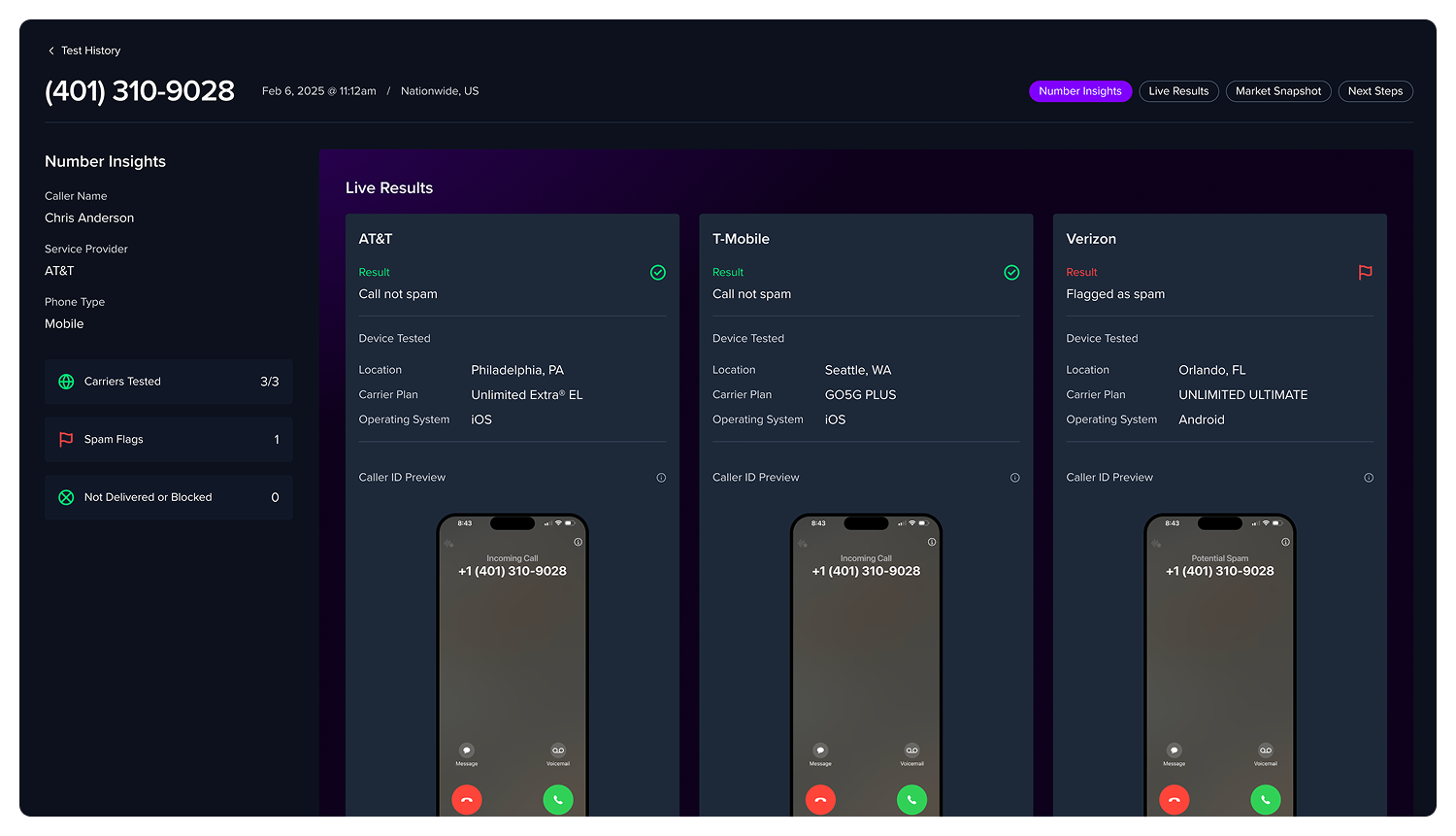
Curious how your calls look to subscribers? You can use the ARMOR® Spam Flag Checker to run a free real-time test across multiple carriers and locations, and see whether your calls are displaying as spam before your reps start dialing.
Learn More: 27 Factors That Can Drive Up Your Spam Flag Risk
The quality of your contact data has a direct impact on number reputation, and this applies equally to prospect lists, customer databases, and operational contacts. Calling disconnected numbers, reaching contacts who don't recognize your organization, or generating immediate hang-ups and blocks produce the exact signals that carrier analytics systems associate with nuisance calling patterns.
Contacts from warmer sources, verified consent, direct form submissions, or existing customer relationships, are more likely to engage, stay on the line, and produce positive signals. Cold or shared lists carry more risk: contacts may not recognize your organization, may have opted in to hear from multiple vendors, or may have done so long enough ago that the outreach feels unexpected. The engagement signals on your end turn negative regardless of how the contact was originally acquired.
Focusing on better targeting and higher-quality sources doesn't mean abandoning volume, but making sure the volume you're running is supported by the contact data behind it is critical in today's call environment.
Contact lists decay faster than many teams realize. Numbers get reassigned, people change roles, and leads that were warm six months ago may no longer be reachable or relevant. Regularly pruning old contacts, updating records, and retiring numbers that haven't engaged in a defined window keeps your active list focused on contacts worth calling.
Number validation tools are one way to support this. They can identify disconnected numbers, flag inactive lines, and confirm line type at scale. For teams with relevant compliance obligations, the FCC's Reassigned Numbers Database (RND) is also worth knowing about.
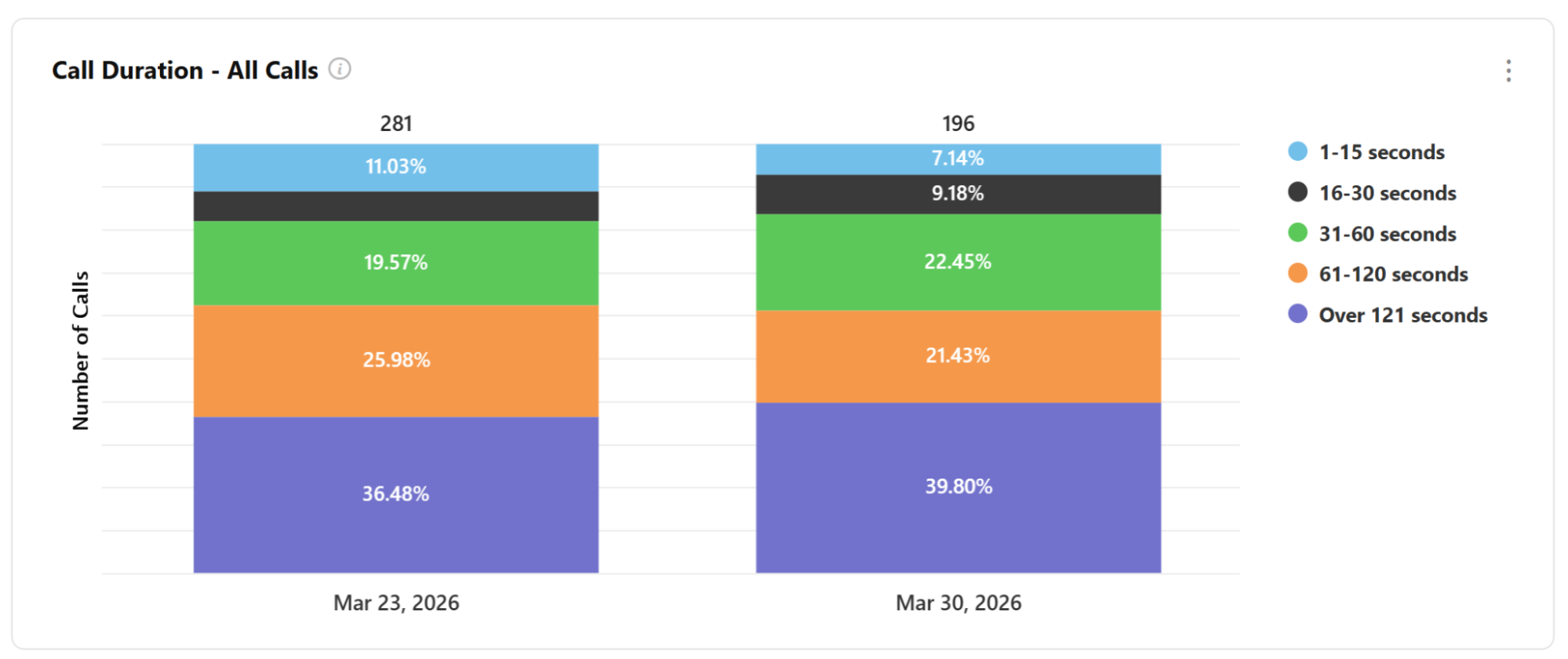
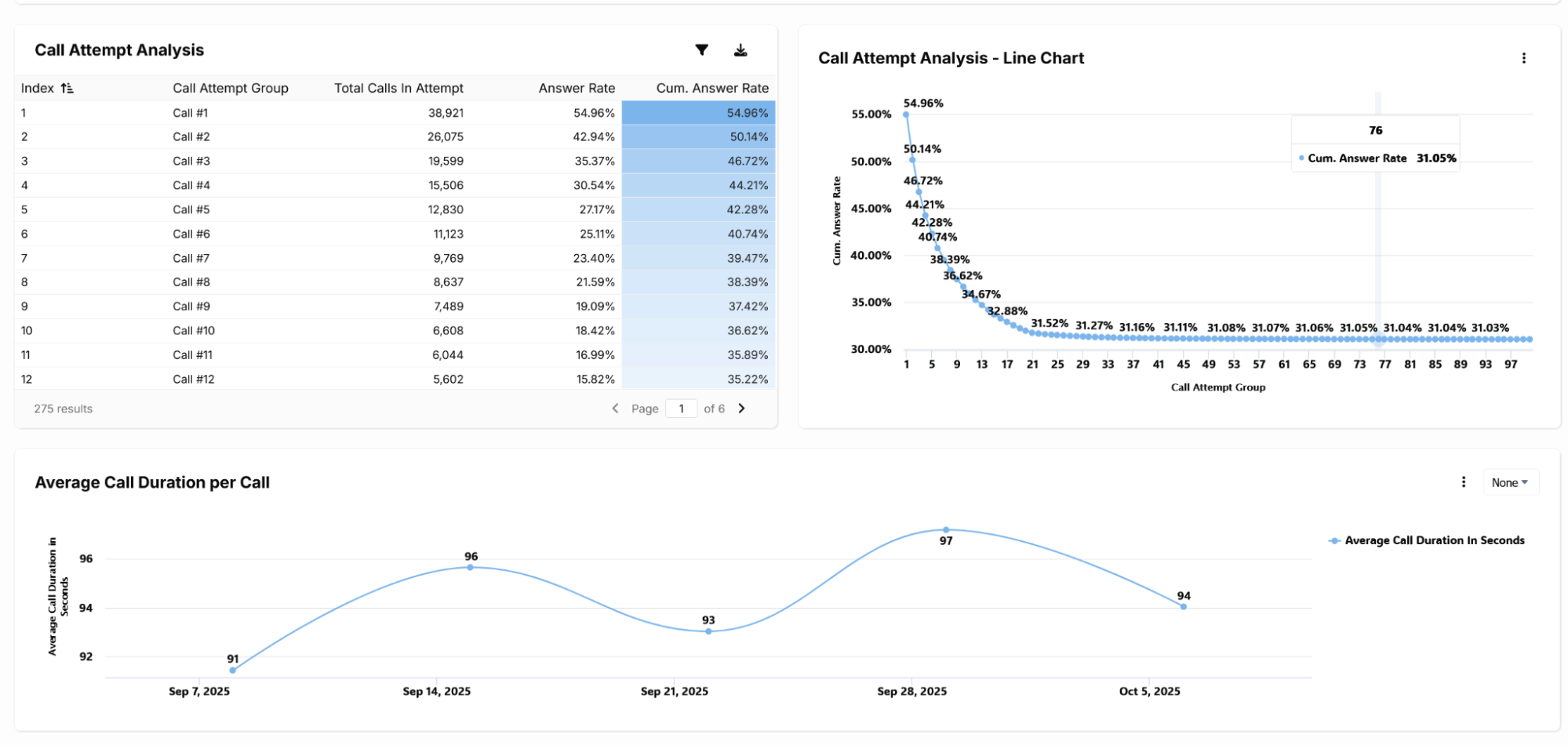
The ARMOR® dashboard breaks down key metrics such as your answer rates, call duration, and call persistence, with filters that provide visibility for specific phone numbers, campaigns, and lead quality metrics such as Connect Scores.
Tip: Use the Call Duration chart to see what proportion of your calls are turning into actual conversations, and which ones are ending almost immediately. This is a strong indicator of whether calls are well received or perceived as a nuisance.
It may seem obvious, but carriers heavily consider consumer complaints when deciding whether or not to flag a number. Even a relatively small volume of complaints can contribute to a flag. Once that flag is applied, remediation requires direct engagement with the carrier that assigned it. If complaint signals are strong enough, carriers may decline remediation requests entirely.
Calling too frequently, reaching contacts who don't recognize your organization, or failing to honor opt-out requests all increase the likelihood of complaints accumulating against your numbers.
Track the signals in your own call data that suggest negative feedback:
When these signals start clustering around a specific number, agent, or campaign, that's the time to pause and investigate, rather than waiting for a flag to appear.
Learn More: Best Practices to Prevent Your Calls From Being Flagged
Consistency is a major trust factor for carriers and analytics engines. Calling patterns are evaluated over time, and drastic changes or anomalies may indicate autodialer misuse or campaign churn. These irregularities can result in flags even when the calls themselves are legitimate.
Here’s what you can do to mitigate this potential issue:
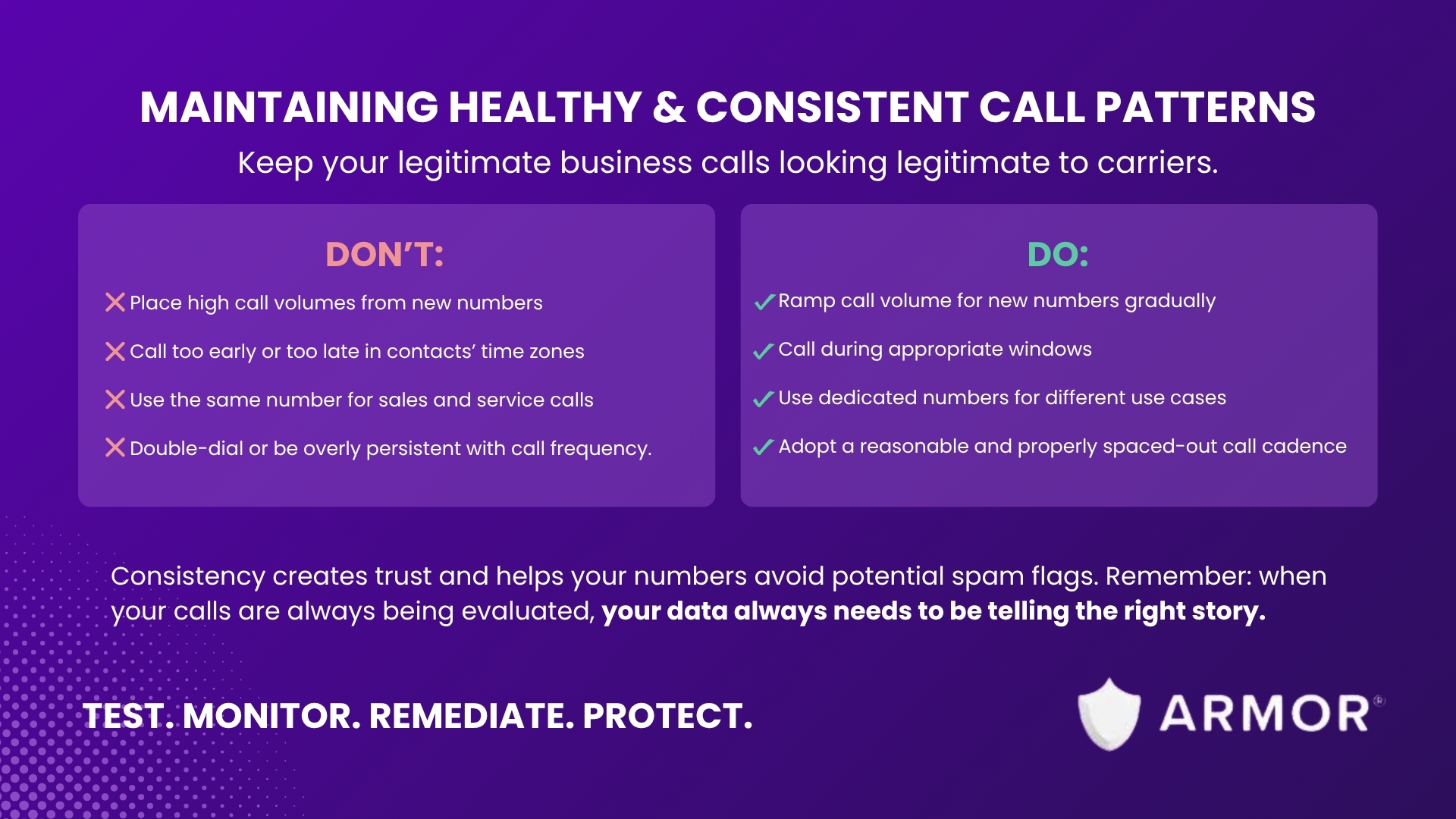
Overcommunication is one of the fastest ways to generate complaints and draw carrier scrutiny.
Learn More: The Truth About Number Rotation
Call deliverability at scale isn't a single fix. It's a system of behaviors that builds the kind of number reputation that carriers and analytics engines reward. Knowing which call behaviors build your reputation and which diminish it is the key to ensuring your numbers aren’t flagged as spam.
The ARMOR® platform gives enterprise teams the visibility to spot problems early, the analytics to make better-informed decisions, and the expert support to remediate when false flags appear. Your dedicated Customer Success Manager can help translate the data in your dashboard into strategic adjustments tailored to your organization's volume, goals, and campaign initiatives.