Even legitimate business numbers can be assigned spam flags or warning labels, and the impact on answer rates is immediate. The most important steps to take when attempting to have these flags removed are to confirm which carriers have flagged you, register your numbers, submit remediation requests to the appropriate carrier(s), review the calling behaviors that likely triggered the flag, and use ongoing monitoring to identify future flags quickly. ARMOR® service includes ongoing monitoring and done-for-you remediation by experts.
You've got calls to make.
So you pull up a list and your phone or dialer, take a deep breath, and kick off what you hope will be a productive call session. You hear the phone ring.
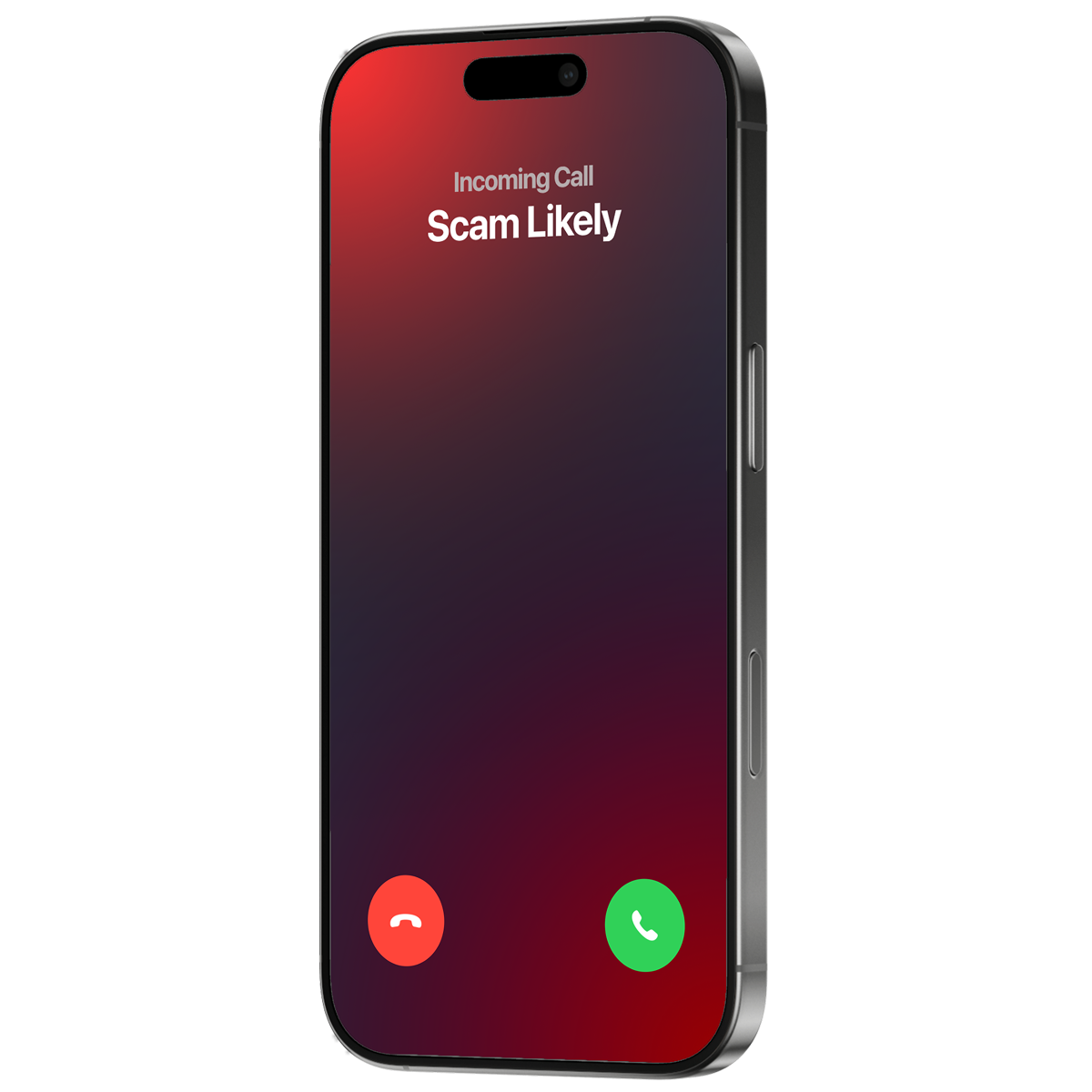
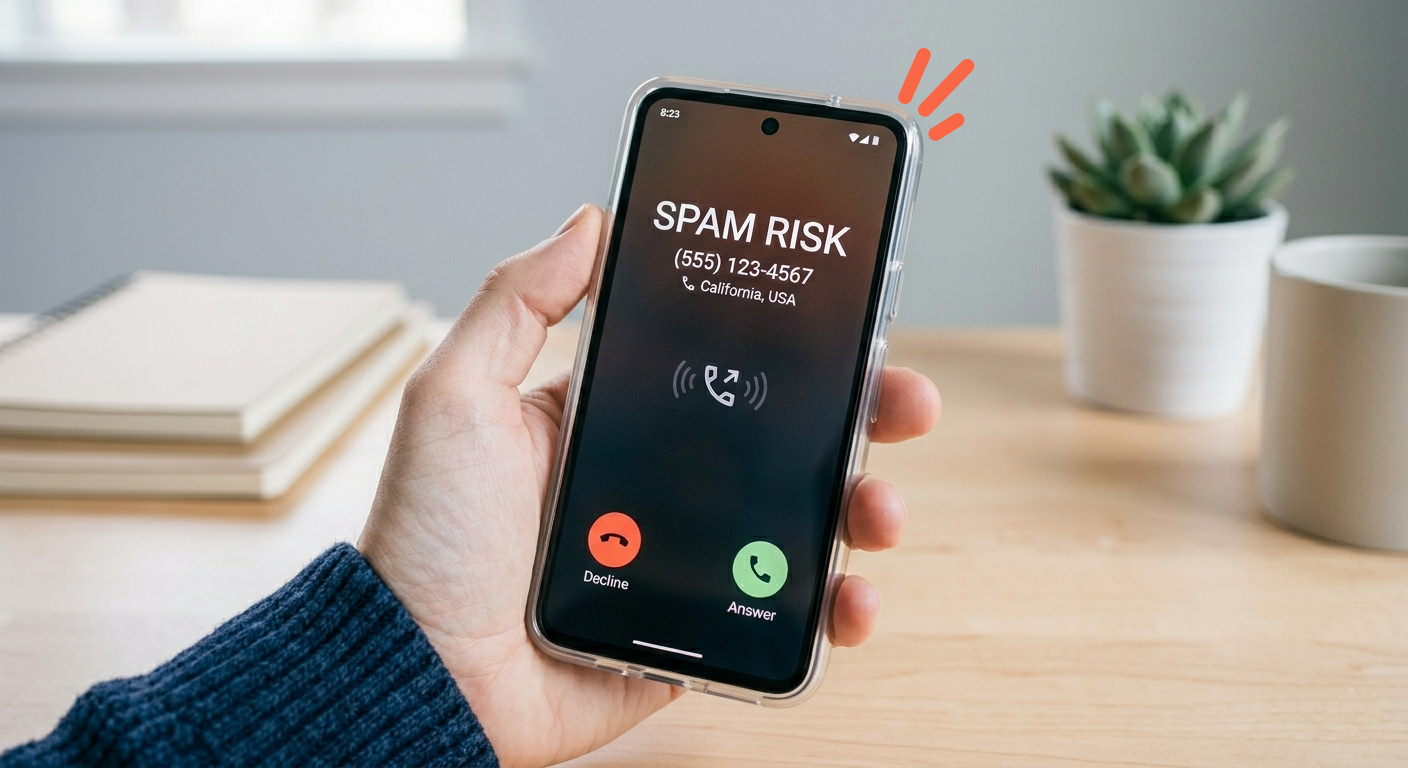
But on their end? "Potential Spam." "Spam Risk." "Scam Likely."
Of course, your odds of getting people on the line have tanked.
When carrier spam filters get it right, everyone wins. They protect people from robocalls, scam operations, and unwanted spam. But sometimes, carriers get it wrong. With over 50 billion calls labeled as spam every year, many legitimate businesses playing by the rules and making wanted calls get caught up in them too.
When that happens the impact is immediate: calls go unanswered, expected outreach never arrives, and the people on the other end — patients, customers, students, prospects — never get the information they were waiting for.
Dialing in the age of "spam risk" isn't easy. The good news: flags can be removed. The process takes some legwork, but it's well-defined — and understanding it puts you back in control.
This post covers exactly what to do when your business number has been mislabeled as spam, from confirming where you're flagged to submitting remediation requests to reducing the risk of it happening again.
Before you take any action to remove spam flags, you need to know exactly where the problem exists.
Carriers flag numbers independently of one another. Verizon, AT&T, and T-Mobile each work with their own analytics partners — Hiya, TNS, and First Orion, respectively — to evaluate and label calls. It’s quite common to be flagged on one network and not on another.
Knowing where you’re flagged is critical, as it:
Don't start fixing until you know what you're fixing.
Ready to run a test? Use our free tool to check all three major networks and see screenshots showing exactly how your number appears on each:
Related: How to Check if Your Phone Number Is Marked as Spam (How to Tell for Sure)
Have you registered your phone number with the carriers?
If not, this is a smart first step.
Carriers and their analytics partners look for signals that a number is associated with a verified, legitimate business. Registration is one of those signals.
The Free Caller Registry is a free website, run in partnership between the analytics engines that power AT&T, Verizon, and T-mobile, where businesses can submit basic information about their organization and how they use their numbers for outbound calling to all three engines simultaneously. Businesses also have the option to register with the carriers individually.
Registration is a step that legitimate businesses can take and bad actors cannot, which is part of what makes it meaningful. It doesn’t guarantee that your calls won’t ever be blocked or labeled, and it won't automatically remove an existing flag, but it establishes a baseline of trust with the analytics engines evaluating your calls — and for a new or unregistered number, it's a straightforward first move. In some cases, it’s also required in order to submit a request to remove a flag from your business numbers.
If you’re an ARMOR® customer, our team performs this step on your behalf in order to provide you with an additional layer of spam flag protection.
If your number is already registered and still flagged, move to Step 2.
Once you know which carriers are flagging you and your number is registered, you can submit a formal review request to have the flag removed.
Each carrier — Verizon, AT&T, and T-Mobile — has its own submission process, its own link, and its own timeline for reviewing and making a determination to remove a spam flag.
There is no single form that covers all three. If you're flagged across multiple carriers, you'll need to submit separately to each one.
Note: Timelines vary by carrier and depend on current carrier bandwidth. Some reviews take days; others take longer. Ultimately, the decision to remove the flag rests with the carrier.
Let us monitor your numbers and remediate false flags on your behalf. We work directly with the carriers, using a proven process, and keep you informed throughout.
Learn more - Over 200,000 spam flags cleared, and counting!
Sometimes the carriers get it wrong. Successful remediation can remove a flag, but calling behavior is what offers protection from future flags.
Analytics engines evaluate a multitude of signals across your calls, and if certain patterns and behaviors re-emerge, flags can come back.
Some key drivers of spam labels:
Remediation requests address the flag, but calling behavior is what supports long-term number reputation. Review your processes and optimize your practices for success.
Related: How to Read Your ARMOR® Dashboard Data: Key Trends to Look For & What They Can Tell You
Carrier analytics engines are constantly evolving, and flags are dynamic. A number that's clean today can be flagged tomorrow, sometimes within minutes of a calling session that trips the wrong signals.
That makes reactive approaches expensive. By the time someone reports a flag or answer rates drop noticeably, the damage is already happening.
Businesses that depend on outbound calling increasingly view phone numbers as assets, and number reputation as a proactive endeavor.
With ARMOR® Call Protection, we routinely monitor your business numbers, alert you when flags are detected, and work directly with the carriers to remove false flags on your behalf. We can also provide the analytics and expert guidance to help you stay ahead of issues before they affect your calls.
There's no shortage of vendors offering help with spam flags. But few come from the inside call protection and spam labeling ecosystem.
We do. The ARMOR® team includes veterans of AT&T, Hiya, First Orion, T-Mobile, and Windstream — the carriers, analytics engines, and platforms that define how calls are evaluated, scored, and labeled. We helped build the systems others are trying to navigate.
This experience allows us to provide a fundamentally different level of guidance. When you work with ARMOR®, you have insiders in your corner.
Ready to protect your numbers?
Use ARMOR® to monitor your business numbers, remediate false flags, and stay ahead of reputation issues before they affect your calls.
Each major carrier — Verizon, AT&T, and T-Mobile — has a remediation process that allows businesses to report numbers that are mislabeled as spam. But each operates independently with its own submission link, its own timeline, and its own criteria for making a determination. For businesses managing multiple numbers, or who want a more streamlined approach, tools like ARMOR® Call Protection offer managed remediation, including monitoring numbers, detecting false flags, and working directly with carriers to get them resolved.
There is no universal timeline. Each carrier — Verizon, AT&T, and T-Mobile — reviews requests independently, and timelines depend on the carrier's current bandwidth. Some reviews resolve in days; others take longer. Ultimately, the decision to remove the flag rests with the carrier.
Carrier analytics engines evaluate a wide range of call behavior signals and patterns including call duration, complaint rates, dialing patterns, and call pacing to determine whether a number should be flagged. Legitimate numbers can be mislabeled when calling behavior resembles patterns associated with spam or robocall operations, even when the calls are wanted and expected.
For a full breakdown of the signals that contribute to spam flags, see: 27 Factors That Can Drive Up Your Spam Flag Risk.
Carriers are not obligated to remove a flag, and a denied or unresolved request often suggests they have enough evidence, complaints, for example, to uphold the flag. A few things worth checking: Is the number registered with the Free Caller Registry? Have you paused or scaled back usage of the number? Has the calling behavior that likely contributed to the flag been addressed?
If the underlying behavior hasn't changed or negative signals persist, a flag is unlikely to resolve. If you believe you've been mislabeled as spam and need help resolving the issue, consider a service like ARMOR® Call Protection to help troubleshoot and remediate on your behalf.