Spam flags are dynamic, carrier-specific classifications driven by call behavior data and third-party analytics, not a centralized registry. That means there is no "spam list" that your number is on, or not on. Carriers use algorithms to apply and remove flags based on real-time data. If you’re a business wondering if your number is flagged as spam and, more importantly, how to act on it, we can help. It’s important to understand how flags actually work, which carriers are showing them, and what your number currently looks like on real subscriber devices.
No one answers the phone for "Spam Risk." That means businesses who rely on the phone for outbound calls need to know if their numbers are coming through clean or flagged as spam.
Whether you've noticed a drop in answer rates, or someone told you, "hey, you're coming up as spam," you may be wondering if your number has made it onto a spam list. It's actually the wrong question to ask (we'll explain, and it's important), but the good news is we can help identify whether your number is clean or flagged, and the next steps.
Your number is not on a spam list – because there is actually no such thing.
Many people imagine a spam list like a do-not-call registry: a centralized database that includes numbers you could theoretically check against.
That's a reasonable assumption. It's also wrong.
Carriers aren't flagging calls based on a shared list. They use independent analytics engines (I worked for one for years, trust me) to score and classify calls in real time, and each carrier operates separately from the others. So what does that actually look like?
Related: How to Check if Your Phone Number Is Marked as Spam (How to Tell for Sure)

Spam flags are dynamic.
Related: 27 Factors That Can Drive Up Your Spam Flag Risk & How the ARMOR® Platform Helps Protect You
Each major carrier works with its own third-party analytics partner: Verizon with Hiya, AT&T with First Orion, and T-Mobile with Transaction Network Services (TNS), each applying its own data and algorithm in real time, based on more factors than you may realize.
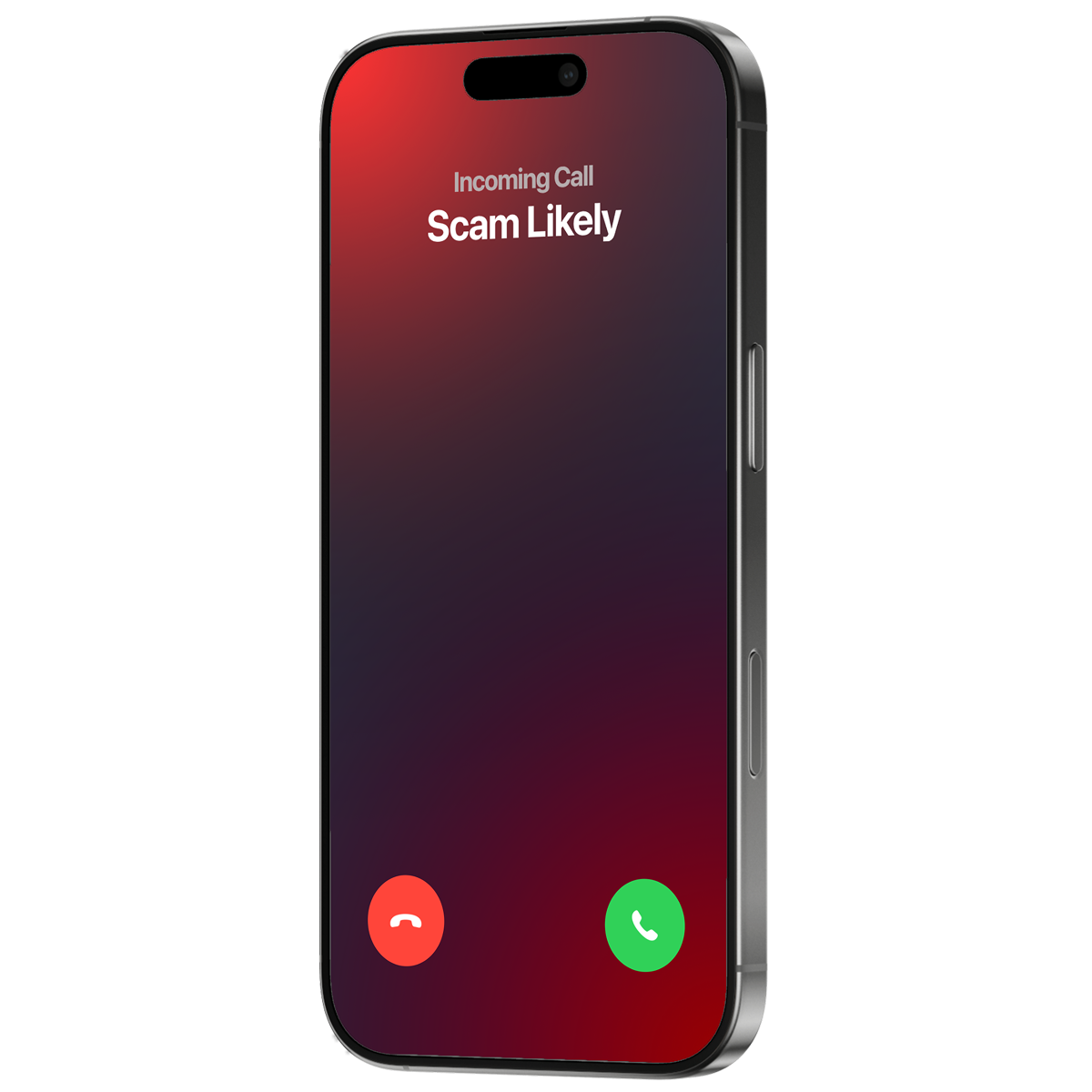
To illustrate just how dynamic the system is, our CEO shared a story and screenshot about a colleague who received 3 rapid-fire calls from the same number in under a minute. Call 1: Clean. Call 2: Clean. Call 3: Scam Likely. That’s how quickly the algorithms operate.
Bottom line? The question isn’t whether you’re on a list. It's how each major carrier is classifying your calls right now, and what to do about it.
The most common first instinct is to call someone you know and ask what shows up. It's a reasonable starting point, but it only tells you how your number appears on one phone, on one carrier, in one location. As we learned above, that isn't enough to act on.
The most reliable way to check is to run a multi-carrier test that places calls to real subscriber devices across Verizon, AT&T, and T-Mobile and returns real-time screenshots of exactly what appears on the screen when the calls come in. That's what ARMOR®'s free [spam flag checker] does, and you can run a test on any number in minutes.
Not only does this method give you a full picture, it also dictates the necessary next steps for remediation if your number is flagged.
If your legitimate business calls are being mislabeled as spam, the next step is to remediate directly with the carriers. Each carrier has a path and process to follow, which is why it’s vital to understand first exactly which carrier(s) are flagging your calls.
One path that rarely works: swapping out the number.
Carriers have grown wise to number cycling (it's a tactic bad actors use routinely) and new numbers not only carry elevated default risk, but can be quickly associated with your previous flagged numbers using shared call path meta data that stays the same regardless of which numbers you use.
The smart approach is to remediate the flag with the carrier and address what contributed to it. That’s where ARMOR® comes in.
Understanding how your calls are being labeled is only the first step. To consistently protect answer rates and outbound performance, teams need ongoing visibility, fast remediation, and a proactive approach to number reputation. The ARMOR® platform provides outbound teams with the data and expert support they need to identify spam flags and other call deliverability threats quickly, then take appropriate steps to restore number reputation and answer rates.
With ARMOR®, you can:
No more guessing or constantly replacing numbers. ARMOR® gives your team a clear, repeatable path to protecting number reputation and maximizing outbound performance.
Interested in ongoing monitoring and remediation? The ARMOR® service helps safeguard your number reputation through proactive protection, ongoing monitoring, and direct carrier remediation.
Our experts have worked at carriers and analytics agencies like AT&T, Hiya, and First Orion, giving us rare insight into why legitimate calls get mislabeled as spam, and how to fix it.
Not in the way most people imagine. There is no centralized database of spam numbers that carriers reference to flag calls, and there is no universal list that consumers, businesses, or bad actors maintain or distribute.
For businesses making outbound calls, spam flags are dynamic, carrier-specific classifications applied in real time by independent analytics engines. Verizon, AT&T, and T-Mobile each work with their own analytics partners to score calls based on behavioral data. Your number isn't added to a list. It gets classified, differently, on each network, based on how your calls are being made and received.
For consumers receiving unwanted calls, the same principle applies in reverse. Spammers don't typically work from a single shared list of numbers to call. They often dial sequentially, randomly, or from whatever contact data they've acquired through data brokers or public sources. There is no list you can search or petition to have your number removed from.
In both cases, understanding that there is no universal list is the starting point for taking the right next step.
Your number is not on a spam list, because there is no such thing as a centralized spam list. Each major carrier, Verizon, AT&T, and T-Mobile, has its own analytics partner that operates independently, assigns (or removes) flags independently, and operates in real time. This also means that spam flags and number reputation commonly vary across carriers.
The better question isn't whether you're on a spam list; it's how each carrier is classifying your calls right now. The most reliable way to find out is to run a multi-carrier test that places calls to real subscriber devices and returns screenshots of exactly what appears on screen.
Since there is no centralized spam list, there is no single place to go to get a number "removed." What you can do is remediate the flag directly with the carrier or carriers showing it, since each major carrier has its own dispute and remediation process for businesses whose legitimate calls are being mislabeled.
Before you can remediate, you need to know exactly which carriers are flagging your calls, since carriers assign and remove flags independently from one another. Running a multi-carrier test first is essential because it tells you the scope of the problem and where to direct your efforts.
Yes. You can use ARMOR®’s spam flag checker to run a live test of your phone number to see exactly how each carrier is labeling your calls in real-time. This provides carrier-specific results, live screenshots from test devices, and other insights you can use to identify potential threats impacting your outbound strategy.
Carrier spam flags can be triggered by a wide range of factors including call behavior patterns, answer rates, call engagement data, and consumer complaints, among many others.
Understanding why your calls are showing as spam requires a closer look at your specific call patterns and history. If you believe your legitimate business calls are being mislabeled, the ARMOR® team can help diagnose and remediate flags on your behalf.
A flag on one carrier does not necessarily mean your number is flagged on others. Because each major carrier operates its own independent analytics system, flags are assigned separately across networks. It is very common for a number to be flagged by one carrier and completely clean elsewhere.
Knowing which carriers are labeling your calls is essential, both for understanding the scope of the issue and for determining next steps, since remediation is carrier-specific.