When bad actors spoof your number, the negative signals from their calls can attach to your caller ID. Enough of those signals trigger spam flags that hurt call deliverability and answer rates. STIR/SHAKEN helps identify spoofed calls but doesn't protect the impersonated business from reputation damage.The ARMOR® service provides ongoing flag monitoring and works directly with carriers to remediate flags, including those tied to spoofing. This can help reduce the damage and keep your legitimate calls connecting.
A coworker recently told me that he started getting "callbacks" from random people.
"Hey, I just saw a missed call from you." "Hey, did you just call me?" "Hi, who is this, I keep getting calls from your number."
Except that my coworker didn't know… or call… any of these people. When it kept happening, it was clear that someone was spoofing his personal phone number. The people receiving calls were calling him back to find out why.
When this happens to anyone, it's frustrating. But when your business number is spoofed, it's not just annoying. It’s costly, and it can damage your business and number reputation, trigger spam flags, and hurt revenue.
The culprit is often invisible. You may not know your numbers are being spoofed or that your reputation has suffered until your answer rates have cratered.
So how does spoofing work? And what can you do about it?
Spoofing occurs when a caller deliberately falsifies their caller ID to display a number they don't own or have the right to use.
According to the FCC, this is illegal when done with the intent to defraud, cause harm, or wrongfully obtain anything of value.
Bad actors use VoIP technology and spoofing services to place calls with someone else's number displayed as the caller ID. They do this to evade detection, avoid registering a number, and redirect callbacks away from themselves. This is inexpensive, widely accessible, and requires no cooperation from the business whose number is being used.
The calls aren't placed from your system, don't appear in your call logs, and carriers won't notify you that your number is being impersonated. The damage usually starts before anyone in your organization knows it's happening.
Some businesses assume that if their number is being spoofed, they were specifically chosen for their brand name or built-in credibility. While it’s possible, in most cases the scammer didn't pick you. Your number just landed in the rotation.
There are three patterns worth understanding.
Scammers run operations at scale. They use large pools of phone numbers and rotate through them to avoid carrier blocks and stay ahead of detection. Real business numbers regularly land in those pools through chance, through scraping of publicly listed contact info, or through random number generation.
When your number is in the rotation, you're just one in the queue. The scammer doesn't care who you are or what your business does. They might use your number for an hour, a day, or weeks before cycling away, and maybe back.
Scammers also deliberately generate numbers that match the recipient's area code and prefix, because local-looking numbers are believed to result in higher pickup rates (though many have wised up to this technique). If they're targeting people in the 555-874 prefix, they may auto-generate numbers like 555-874-2391, 555-874-2435, and so on. If your number ends up being used it’s just unlucky.
Scammers may target existing business numbers because they come with built-in credibility and legitimacy. When a call shows a legitimate company name and number, people are more inclined to pick it up than if it shows up with a label like “Unknown Number”. That trust is what some bad actors are attempting to hijack.

When your number is spoofed, the reputation damage accumulates on your number, not the bad actor placing the calls. They're using your caller ID, so negative signals their calls produce get attributed to your number. In theory, carriers may be able to use call origination data to separate spoofed traffic from your real calls, but this isn't reliable enough to count on.
Here’s how the damage takes shape:
When someone spoofs your number, negative call patterns and outcomes can be attributed to your caller ID. Consumers who receive a spoofed scam call displaying your number may:
All of these produce negative reputation signals, which carriers and analytics engines may attribute to your number and phone calls. Independent of consumer signals, carriers may also attribute call behaviors like volume spikes, low answer rates, and after-hours calls to your number.
When spoofing continues unchecked, these negative signals build up. Eventually (and it may not take long) this can trigger spam flags across one or more carriers.
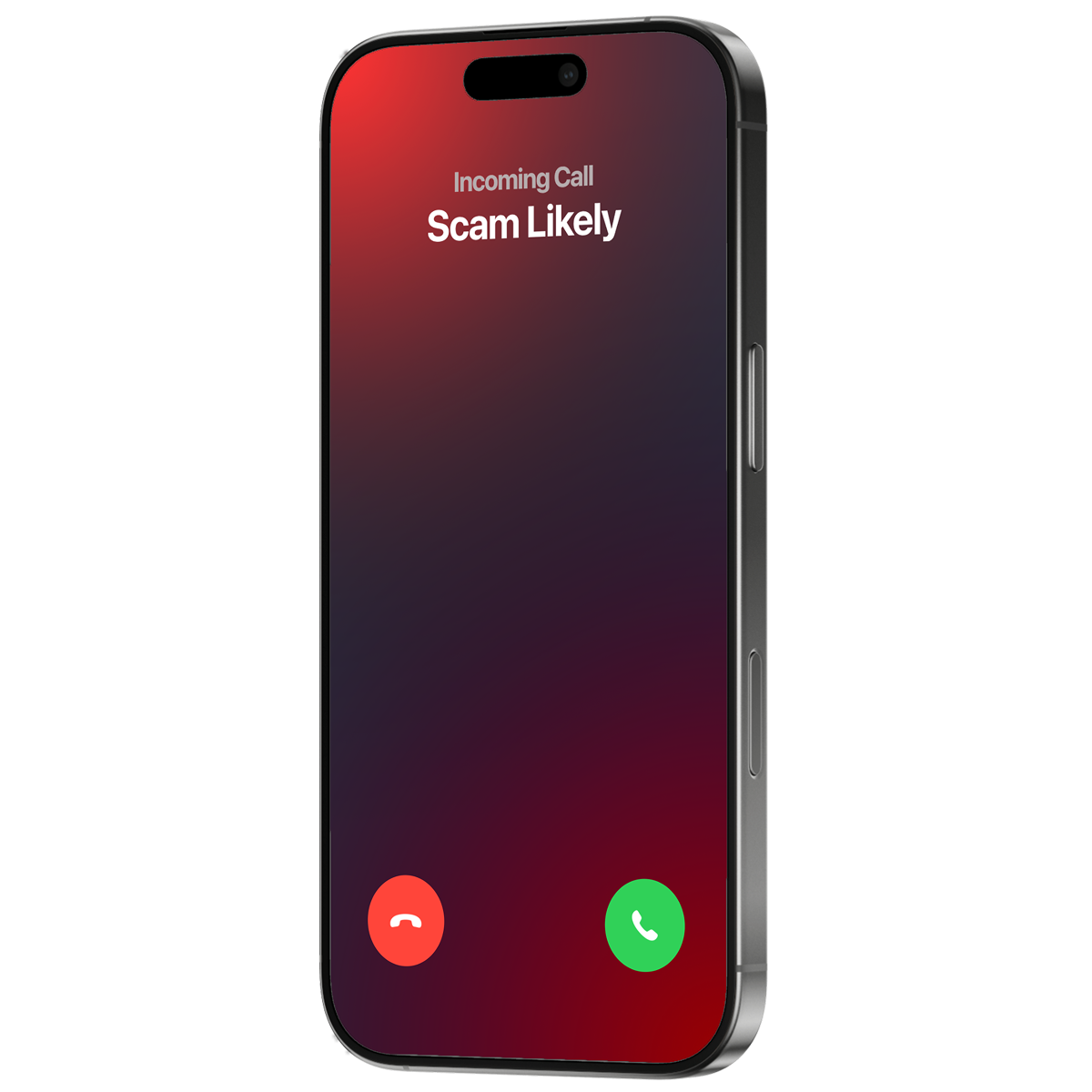
Once that happens, even your legitimate outbound calls start displaying warning labels to the contacts your team calls. The resulting decline in answer rates can be difficult to diagnose.
From your team's perspective, nothing has changed about your calling behavior. But from a carrier's perspective, your number has a growing track record of complaints, negative signals, and inconsistent STIR/SHAKEN attestation, which may justify a flag.
Unless you’re actively monitoring your outbound numbers to detect spam flags, they can silently impact your answer rates without you knowing why.
It's a reasonable question. STIR/SHAKEN was specifically developed by the telecom industry and the FCC to combat caller ID spoofing, and it's been mandated for most U.S. voice service providers since 2021. The framework does real work.
But the picture looks different depending on which side of the call you're on.
STIR/SHAKEN is a framework that authenticates calls at their point of origin. When a call is placed, the originating carrier checks whether the caller has the right to use the displayed number, then attaches an attestation level.
Calls with A-level attestation may display as "verified" on the recipient's phone, depending on the receiving carrier. Calls with C-level or unsigned attestation are more likely to be viewed as suspicious, flagged, or filtered.
For legitimate businesses, strong attestation on outbound calls also serves as a positive trust signal that can favorably impact how carriers and analytics engines treat the calling number.
The framework gives carriers a signal to act on and gives consumers a way to recognize authenticated calls. As far as design goes, it works.
While STIR/SHAKEN may do a great job at identifying spoofing, it doesn't offer much protection to the person or business being spoofed. Even when a spoofed call is flagged, the damage can still land on your number.
That's unfortunate, because the very defenses STIR/SHAKEN enables wind up hurting the number being impersonated, not the bad actor placing the calls. When a consumer hangs up, blocks the number, or reports the call, those signals get attributed to your caller ID.
Preventing spoofing is largely outside your control. What you can control is how quickly you detect the damage and how effectively you respond.
Since you can't see the spoofing itself, monitoring for the threat it produces is critical. A flag tells you that complaints and negative signals have accumulated enough to trigger carrier action. You're unlikely to know whether spoofing contributed, but you can begin taking steps to mitigate the damage.
Learn More: 5 Reasons Legitimate Calls Get Mislabeled As Spam
The one direct sign of spoofing you can catch yourself is people calling you back about calls you never placed. They got a call displaying your number and want to know who reached out. Wrong numbers happen, but a pattern of these in a short window is a strong indication that someone is using your number on calls you didn't make.
If you suspect your numbers are being spoofed, you can file a complaint with the FCC's caller ID complaint portal. You should also contact your carrier to let them know and ask what advice they can offer.
A complaint on its own can’t prevent or stop spoofing, but it creates a record that may serve as supporting documentation and strengthen your position when pursuing flag remediation. It also feeds into the broader enforcement picture by helping regulators go after bad actors.
When flag activity shows up on your numbers, remediation is the path to clearing it. That means submitting a request to the carrier or analytics provider that assigned the flag, making the case that it isn't deserved. The evidence depends on what you know: your normal calling patterns, signals pointing to spoofing, or both. Carriers don't auto-correct; the request has to be made, supported, and followed up on.
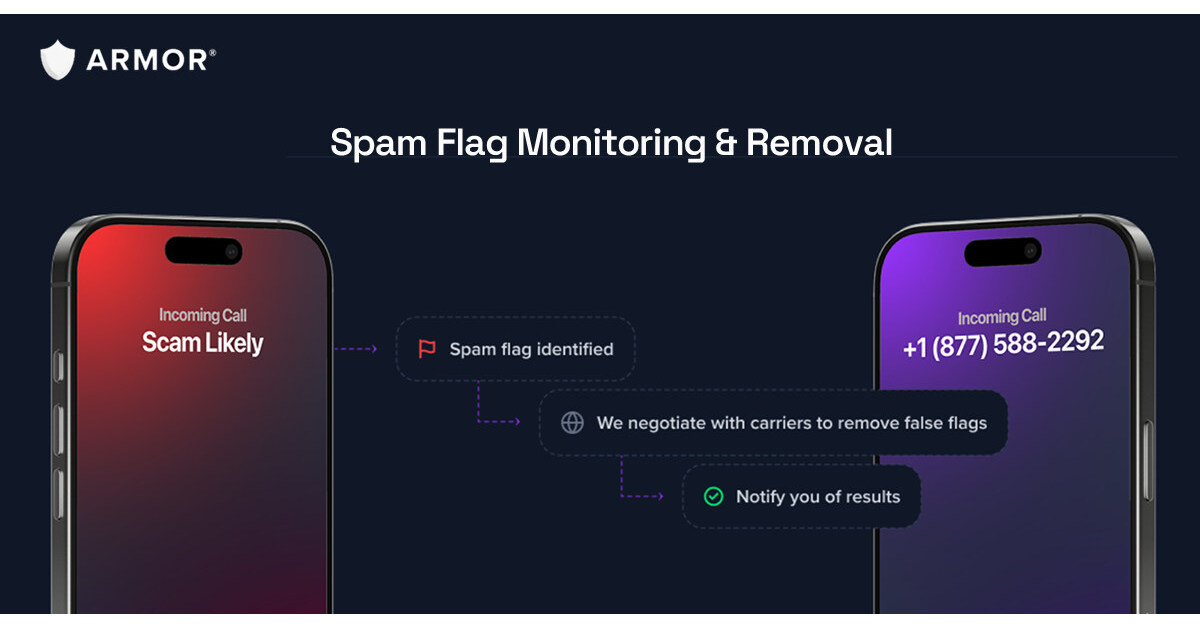
Monitoring for flags, identifying spoofing, and remediating with carriers takes know-how and bandwidth that businesses simply don't have. That's where the ARMOR® team comes in. Staffed by veterans of carrier analytics providers and major U.S. carriers, we have the analytics access and carrier relationships to handle the parts of the problem that businesses can't manage alone.
Our tools help identify spoofing activity, even when you can't see it from inside your own systems. When detected, that information becomes evidence in the remediation requests we make to the carriers that flagged your number.
The ARMOR® service also handles ongoing flag monitoring, so activity surfaces quickly and remediation can begin without delay.
Related Reading:
Number spoofing is one of the few reputation threats that's almost entirely beyond your control. The damage it causes doesn't have to be. The ARMOR® service helps safeguard your business numbers against a wide range of threats to their number reputation, including spoofing, so more calls connect and more conversations happen.
Want our team to be an extension of yours?